Discover the best jungle safari tours in Nepal and explore the country's incredible wildlife beyond the Himalayas. From the famous Chitwan National Park to the quieter wilderness of Bardia National Park, learn about the best safari activities, wildlife you can see, ideal travel seasons, how to reach the parks, and tips for a responsible and memorable Nepal wildlife safari.
Jungle Safari Tours in Nepal: Best Parks, Wildlife and Best Time
Table of Contents
Jungle Safari in Nepal at a Glance
- Best overall: Chitwan National Park
- Best for a quieter wildlife experience: Bardia National Park
- Best time: October to March
- Popular activities: Jeep safari, jungle walk, canoe ride, birdwatching, village and cultural tours
- Famous wildlife: Bengal tiger, one-horned rhinoceros, crocodile, wild elephant, deer, leopard, sloth bear, and hundreds of bird species
- Recommended duration: 2–3 days in Chitwan and 3–5 days in Bardia
- Best region for safari: Nepal's southern Terai
Introduction of the Jungle Tours in Nepal
Nepal is best known for its Himalayan peaks, trekking routes, ancient temples, and mountain adventures. However, beyond the mountains lies another fascinating side of the country—the tropical wilderness of the Terai region.
A jungle safari in Nepal takes you into a world of dense forests, open grasslands, wetlands, rivers, and wildlife habitats. Instead of walking toward towering mountains, you travel quietly through the jungle, listening to birds, watching deer move through the grass, and searching for tracks left by some of Nepal's most remarkable animals.
Nepal wildlife safari experiences are particularly famous for the chance to see the one-horned rhinoceros and Bengal tiger in their natural habitats. Depending on the park and season, you may also encounter crocodiles, wild elephants, leopards, sloth bears, deer, monkeys, and a remarkable variety of birds.
Among Nepal's protected areas, Chitwan National Park and Bardia National Park are the two most popular destinations for jungle safari tours in Nepal. While both offer exciting wildlife experiences, they have different atmospheres and are suited to different types of travelers.
Best Places for Jungle Safari in Nepal
The best wildlife safari destinations in Nepal are mainly located in the southern Terai lowlands. The two leading choices are Chitwan National Park and Bardia National Park.
Chitwan National Park
Chitwan National Park is the most popular destination for a Nepal jungle safari and is often the best choice for first-time visitors. Established in 1973, Chitwan is one of Nepal's most important protected areas and is recognized as a UNESCO World Heritage Site. The park covers a diverse landscape of forests, grasslands, wetlands, and river habitats.
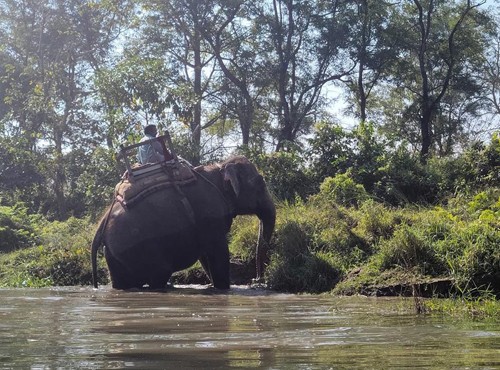
Chitwan is particularly famous for its greater one-horned rhinoceros, while Bengal tigers, leopards, sloth bears, wild elephants, deer, crocodiles, and numerous bird species are also found in the park. The Rapti, Narayani, and Reu rivers add to Chitwan's ecological diversity and create excellent habitats for reptiles, waterbirds, and other wildlife.
A Chitwan safari tour can include several activities:
- Jeep safari through the forest
- Guided jungle walk
- Canoe or river safari
- Birdwatching
- Wildlife photography
- Tharu cultural experiences
- Village visits
Chitwan is also convenient for travelers because it has a well-developed tourism infrastructure, with numerous hotels, resorts, guides, and safari operators around the park.
How to Get to Chitwan National Park
Travelers can reach Chitwan from Kathmandu/Pokhara by road or by air. The quickest option is generally a domestic flight from Kathmandu/Pokhara to Bharatpur Airport, followed by a road transfer to the Chitwan area. The flight itself is short, and the onward drive depends on your exact destination.
For travelers who prefer road travel, buses and private vehicles operate between Kathmandu/Pokhara/Lumbini and Chitwan. The journey usually takes several hours and follows the highway through the hills before descending into the Terai.
A private car is a comfortable option for travelers who want greater flexibility, while tourist buses are generally more economical.
Bardia National Park
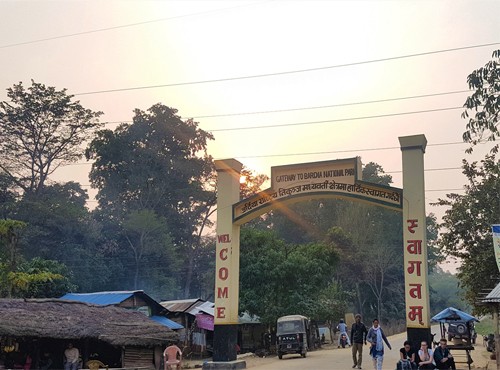
For travelers looking for a quieter and more remote wildlife experience, Bardia National Park is an excellent alternative to Chitwan. Located in the southwestern Terai, Bardia is known for its large areas of relatively undisturbed forest, grassland, and riverine habitat. It offers a more peaceful atmosphere and generally feels less developed than Chitwan.
Bardia is home to an impressive range of wildlife, including Bengal tigers, one-horned rhinoceroses, wild elephants, swamp deer, leopards, crocodiles, and hundreds of bird species.
One of the major attractions of a Bardia National Park safari is the opportunity to spend more time exploring the wilderness. The park's extensive habitats provide excellent opportunities for wildlife watching and photography.
Popular Bardia safari activities include:
- Jeep safari
- Jungle walk
- Birdwatching
- River and canoe trips
- Wildlife photography
- Village visits
- Tharu cultural experiences
For dedicated wildlife enthusiasts, photographers, and travelers who prefer nature over busy tourist areas, Bardia can be a particularly rewarding destination.
How to Get to Bardia National Park
The most convenient way to reach Bardia from Kathmandu/Pokhara is generally to fly to Nepalgunj, followed by a road transfer to the park area. The flight from Kathmandu/Pokhara to Nepalgunj takes around an hour, although schedules can vary. From Nepalgunj, the journey continues by private vehicle or local transportation.
Traveling by road from Kathmandu/Pokhara is another option. However, the journey is considerably longer and can take around 12–14 hours or more depending on road and traffic conditions.
Because Bardia is farther from Kathmandu than Chitwan, it is better suited to travelers who can spend several days on their wildlife tour.
What Wildlife Can You See on a Jungle Safari in Nepal?
A Nepal wildlife safari provides opportunities to see a wide variety of animals in different habitats. Wildlife sightings are never guaranteed because animals are wild and their behavior changes according to season, weather, time of day, and habitat conditions.
Some of the animals you may encounter include:
- Bengal tiger
- Greater one-horned rhinoceros
- Wild elephant
- Leopard
- Sloth bear
- Spotted deer
- Sambar deer
- Wild boar
- Crocodiles
- Gharial
- Monkeys
- Dolphins
- Hundreds of bird species
The one-horned rhinoceros is one of the most recognizable animals of Chitwan, while Bardia is particularly attractive to travelers hoping to explore tiger habitat. Bird lovers can also find Nepal's Terai particularly rewarding. Depending on the season and location, you may see hornbills, kingfishers, egrets, storks, eagles, and many other species.
Jungle Safari Activities in Nepal
A jungle safari is more than simply riding through a forest looking for animals. Different activities allow visitors to experience the ecosystem from different perspectives.
1. Jeep Safari
A jeep safari is one of the most popular ways to explore Nepal's national parks. Traveling by vehicle allows you to cover more ground and reach different wildlife habitats. Experienced guides can help identify animal tracks, calls, feeding areas, and signs that may otherwise go unnoticed. Jeep safaris are particularly suitable for families, older travelers, and visitors who want to explore larger sections of the park.
2. Jungle Walk
A guided jungle walk provides a much more intimate connection with nature. Walking through the forest allows you to notice smaller details, such as animal footprints, insects, plants, bird calls, and signs of wildlife activity. Because wildlife encounters on foot require greater caution, jungle walks should always be conducted with an experienced guide and according to park regulations.
3. Canoe or River Safari
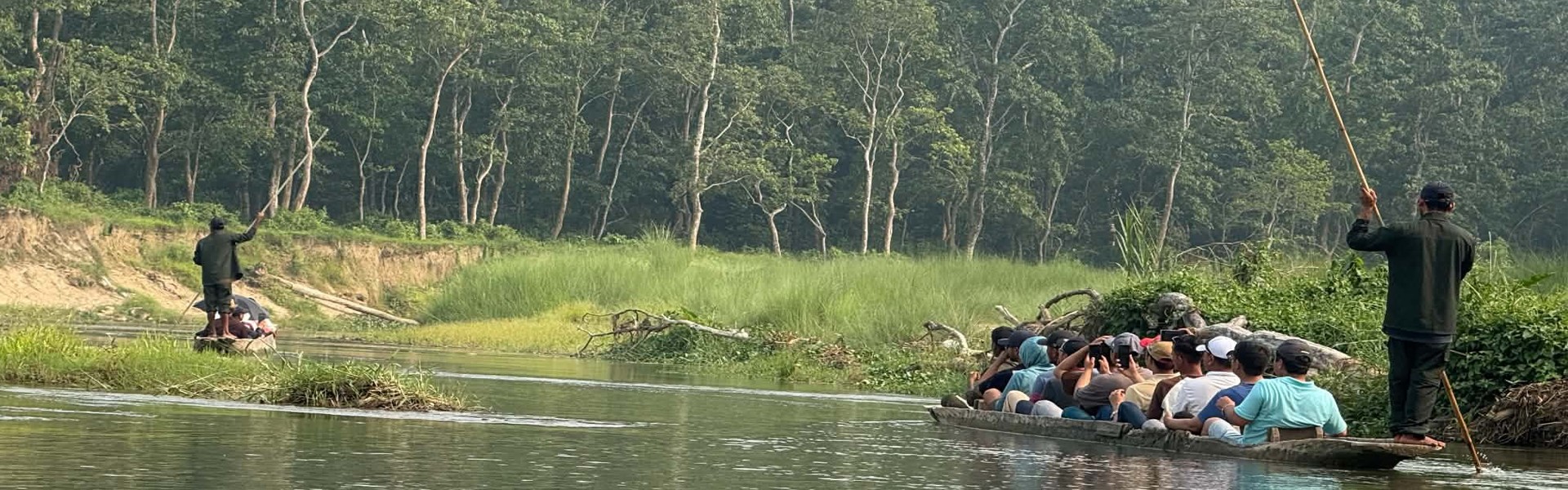
A canoe ride is a peaceful way to explore rivers and wetlands. You may see crocodiles resting along the riverbank, waterbirds feeding in shallow water, and animals coming to the river to drink. The quieter nature of a canoe safari also makes it a great option for travelers interested in birdwatching and photography.
4. Birdwatching
The Terai is one of Nepal's best regions for birdwatching. Early morning is often particularly rewarding because birds are active and the jungle is filled with calls and movement. Even if you do not see a large mammal, a guided birdwatching walk can make for an excellent wildlife experience.
5. Tharu Cultural Experience
A jungle safari can also introduce visitors to the culture of communities living around Nepal's protected areas. In Chitwan and Bardia, travelers can learn about Tharu culture, visit local villages, experience traditional performances, and learn how local communities have developed alongside the surrounding wildlife habitats. Combining wildlife and cultural experiences makes a Nepal nature tour more meaningful and memorable.
Best Time for a Jungle Safari in Nepal
Choosing the right safari season can make a significant difference to your experience.
October to March – Best Overall
October to March is generally considered the best time for a jungle safari in Nepal. The weather is usually cooler and drier, making it comfortable for jeep safaris, jungle walks, canoe rides, and birdwatching. During the dry season, vegetation may become less dense, which can sometimes improve visibility. January and February can be cooler, especially in the mornings, so carrying warm clothing for early safari activities is recommended.
April to May – Good for Wildlife Watching
April and May can be hot in the Terai, but these months can still be rewarding for wildlife enthusiasts. As temperatures increase and smaller water sources become limited, animals may gather around remaining water sources. This can sometimes create good wildlife-watching opportunities. However, daytime temperatures can be high, so early-morning and late-afternoon safari activities are generally more comfortable.
June to September – Monsoon Season
June to September is Nepal's monsoon period. Heavy rainfall can make roads and safari tracks muddy, while thick vegetation can reduce visibility. Some safari activities may also be affected by weather and park conditions. For these reasons, the monsoon is generally not the preferred season for a classic jungle safari in Nepal.
Why Go on a Jungle Safari in Nepal?
There are many reasons to add a wildlife safari to your Nepal itinerary.
Experience Nepal Beyond the Himalayas: Nepal is not only a mountain destination. The Terai offers an entirely different landscape of tropical forests, grasslands, rivers, and wetlands. A jungle safari allows travelers to experience this contrasting side of Nepal.
See Rare Wildlife: Nepal is home to some remarkable and endangered animals. Seeing a one-horned rhinoceros moving through the grassland or spotting a crocodile along a riverbank can be a highlight of any Nepal wildlife tour. If luck is on your side, you may even encounter a Bengal tiger.
Enjoy Nature and Adventure: Safari activities combine adventure with nature. A jeep ride through the forest, a quiet canoe trip, or a guided walk creates an experience that is very different from sightseeing in cities and cultural destinations.
Support Conservation: Protected areas such as Chitwan and Bardia play an important role in wildlife conservation. Responsible tourism can contribute to local economies and encourage continued protection of important habitats.
Combine Wildlife and Culture: The communities surrounding Nepal's national parks add another dimension to the journey. A safari can be combined with local village visits and cultural experiences, particularly opportunities to learn about Tharu traditions.
What Makes a Nepal Jungle Safari Tour Special?
Several things make jungle safari tours in Nepal different from ordinary sightseeing experiences:
- Rare wildlife: Opportunities to observe endangered and protected animals in their natural habitats.
- Diverse landscapes: Explore sal forests, grasslands, wetlands, rivers, and tropical ecosystems.
- Wildlife adventure: Every safari is unpredictable, and no two outings are exactly the same.
- Birdwatching: The Terai is home to a remarkable diversity of birds.
- Local culture: Wildlife experiences can be combined with Tharu cultural activities.
- Conservation: Tourism can support protected areas and communities when practiced responsibly.
Chitwan vs. Bardia: Which Should You Pick?
Both parks offer excellent wildlife experiences, but the right choice depends on your travel style.
| Feature | Chitwan National Park | Bardia National Park |
Accessibility | Easier to reach from Kathmandu/Pokhara/Lumbini | More remote; usually reached via Nepalgunj |
Recommended stay | 2–3 days | 3–5 days |
Atmosphere | More developed and popular | Quieter and more remote |
Wildlife highlights | Rhinos, tigers, crocodiles, gharials, deer and birds | Tigers, rhinos, elephants, dolphins, deer and birds |
Best for | First-time visitors, families, shorter trips | Wildlife enthusiasts, photographers, nature lovers |
Safari experience | Variety of safari activities and facilities | More secluded wilderness experience |
Choose Chitwan If:
- It is your first jungle safari in Nepal.
- You have limited time.
- You want easier access from Kathmandu.
- You prefer a wider choice of accommodation and activities.
- You want to combine wildlife with cultural experiences.
Choose Bardia If:
- You prefer quieter destinations.
- Wildlife photography is a major interest.
- You want a more remote wilderness experience.
- You have 3–5 days available.
- You are particularly interested in exploring tiger habitat.
Responsible Tourism and Park Rules
A jungle safari should be enjoyable while also protecting the animals and habitats you have come to see.
Keep these basic principles in mind:
- Respect Wildlife: Never approach, feed, chase, or disturb wild animals. Keep a safe distance and always follow your guide's instructions.
- Keep the Jungle Clean: Take your rubbish with you and avoid leaving plastic or other waste inside protected areas.
- Keep Noise to a Minimum: Loud sounds can disturb wildlife and reduce your chances of observing animals naturally. Quiet observation is part of the safari experience.
- Follow Park Regulations: Stay on designated routes and trails, follow instructions from guides and park staff, and do not leave the vehicle unless your guide says it is safe and permitted.
- Support Local Communities: Consider staying in locally operated accommodations, hiring local guides, and purchasing locally made products. Responsible tourism can help ensure that communities benefit from wildlife tourism.
Tips for a Better Nepal Jungle Safari
A little preparation can make your wildlife tour more comfortable.
- Wear comfortable clothing: Choose lightweight, breathable clothing during warmer months and carry warmer layers during winter mornings.
- Bring binoculars: They are especially useful for birdwatching and observing animals from a safe distance.
- Carry sun protection: Sunglasses, sunscreen, and a hat can be useful during jeep safaris and walks.
- Use insect protection: Insect repellent can make outdoor activities more comfortable, particularly around forests and wetlands.
- Carry a camera: Wildlife photography can be rewarding, but remember to prioritize observation and responsible behavior over getting the perfect photograph.
- Start early: Morning safari activities are often among the most enjoyable because temperatures are cooler and many animals are active.
- Be patient: Wildlife spotting requires patience. A safari is not a zoo visit, and sightings cannot be guaranteed.
How Many Days Do You Need for a Jungle Safari in Nepal?
The ideal duration depends on your destination.
For Chitwan National Park, 2–3 days is usually enough for a first visit. This gives you time for activities such as a jeep safari, jungle walk, canoe ride, and cultural experience.
For Bardia National Park, 3–5 days is recommended. The longer stay allows you to explore more of the park and spend additional time on wildlife-watching activities.
If wildlife photography or tiger tracking is a major priority, spending more days in the park can increase your opportunities for wildlife encounters.
Is a Jungle Safari in Nepal Safe?
Yes, a jungle safari in Nepal is generally safe when visitors follow park rules and their guide's instructions. However, wildlife is unpredictable. Animals such as rhinoceroses, elephants, bears, and tigers are wild and should never be approached. Always maintain a safe distance, avoid sudden movements or loud noises, and remain inside the safari vehicle when instructed. During jungle walks, stay with your guide and follow all safety instructions. Your guide's experience and knowledge of the environment are important parts of a safe wildlife experience.
Final Thoughts
A jungle safari in Nepal reveals a completely different side of the country. Instead of snow-covered Himalayan peaks, you find yourself surrounded by tropical forests, grasslands, rivers, wetlands, and the sounds of wildlife. You may watch a one-horned rhinoceros grazing in the grass, see a crocodile resting beside a river, photograph colorful birds, or if you're fortunate catch a glimpse of a Bengal tiger.
For most first-time visitors, Chitwan National Park is the easiest and most convenient choice. For travelers seeking a quieter and more remote wilderness experience, Bardia National Park is an excellent alternative. The best overall season is generally October to March, when cooler and drier weather makes safari activities more comfortable.
So, when planning your next trip to Nepal, don't limit your adventure to the Himalayas. Head south into the Terai, explore the jungle, meet the communities that live alongside it, and discover Nepal's extraordinary wildlife.
Frequently Asked Questions
Q1. Which is the best jungle safari in Nepal?
Chitwan National Park is generally the best choice for first-time visitors because it is accessible from Kathmandu/Pokhara and offers a wide range of safari activities and accommodation. Bardia National Park is better suited to travelers looking for a quieter and more remote wildlife experience.
Q2. Is Chitwan or Bardia better for tiger sightings?
Bardia is particularly well known for its tiger habitat and can be an excellent choice for travelers interested in Bengal tigers. However, tiger sightings are never guaranteed. Chitwan also supports a significant tiger population and offers excellent opportunities to see rhinos and other wildlife.
Q3. How many days do you need for a jungle safari in Nepal?
For Chitwan, 2–3 days is generally sufficient for a first safari experience. For Bardia, 3–5 days allows more time for wildlife activities and exploration.
Q4. What animals can you see on a Nepal jungle safari?
Depending on the park and season, you may see Bengal tigers, one-horned rhinoceroses, wild elephants, leopards, sloth bears, deer, crocodiles, gharials, wild boar, monkeys, and many species of birds.
Q5. What is the best month for a jungle safari in Nepal?
October to March is generally the best period for a jungle safari. January and February offer cooler conditions, while October and November often provide pleasant weather after the monsoon season.
Q6. Is a jungle safari in Nepal safe?
Yes. Jungle safaris are generally safe when visitors follow park regulations and the instructions of experienced guides. Wildlife should always be observed from a safe distance, and visitors should never approach or feed animals.
Q7. Can you see tigers in Chitwan National Park?
Yes, Bengal tigers live in Chitwan National Park. However, seeing a tiger is never guaranteed because they are elusive wild animals. Early morning and patient wildlife watching can improve the overall safari experience, but sightings ultimately depend on luck and natural conditions.
Q8. What is the difference between Chitwan and Bardia safari?
Chitwan is more accessible, more developed for tourism, and suitable for shorter trips and first-time visitors. Bardia offers a quieter, more remote atmosphere and is particularly appealing to serious wildlife enthusiasts, photographers, and travelers with more time.
Q9. Is Nepal good for wildlife photography?
Yes. Nepal offers excellent opportunities for wildlife photography, particularly in Chitwan and Bardia. The combination of rhinos, tigers, elephants, deer, crocodiles, birds, forests, rivers, and grasslands provides a diverse range of subjects.
Q10. What should I bring on a Nepal jungle safari?
Useful items include comfortable clothing, sturdy shoes, sunscreen, sunglasses, a hat, insect repellent, binoculars, a camera, and a water bottle. During the cooler months, a warm layer is useful for early-morning safari activities.