Manaslu Circuit with Serang Gompa Trek - 19 Days

Know before you go
  • Duration 19 Days
  • Difficulty Level Strenuous
  • Trip Start and End Kathmandu to Kathmandu
  • Best Season Mar-May and Sep-Nov
  • Trip Area Manaslu Region
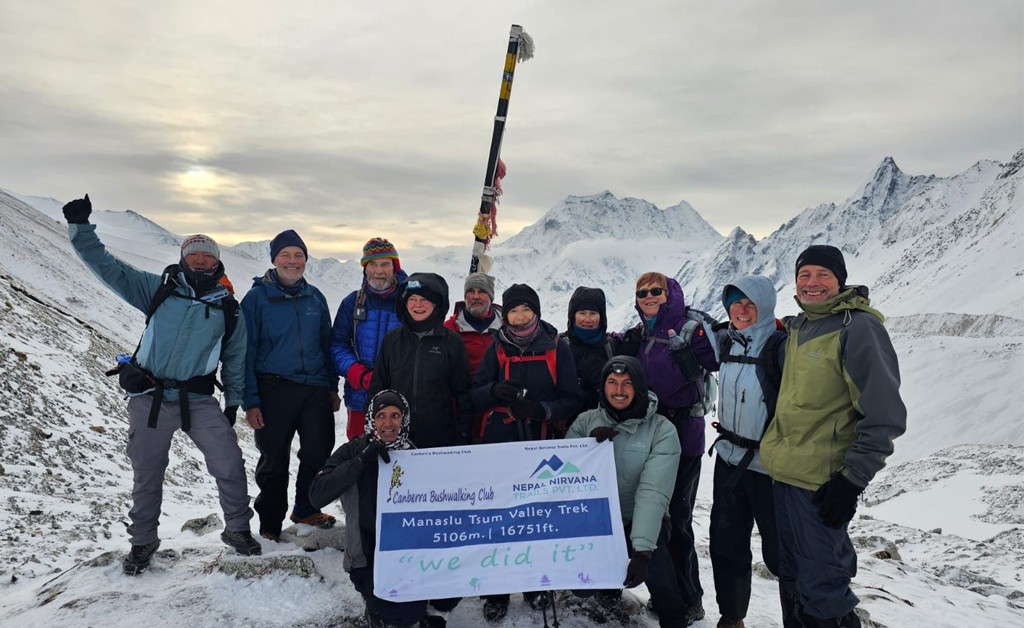
  • Maximum Altitude 5106m.|16751ft.

Highlights

  • Visit to Serang Gompa, a hidden and spiritually significant Buddhist monastery.
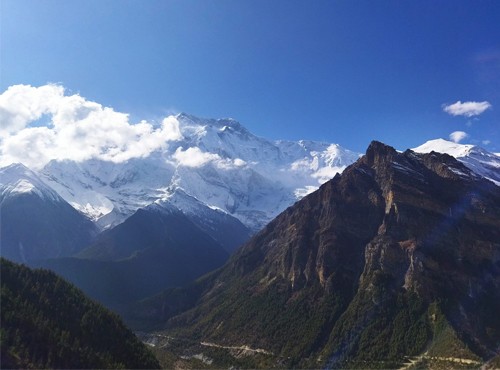
  • Majestic views of Himalayan peaks such as Shringi Himal, Buddha Himal, and Hiunchuli
  • Experience of untouched and less-crowded trekking routes away from commercial tourism.
  • Deep insight into Tibetan-influenced Buddhist culture and traditions.
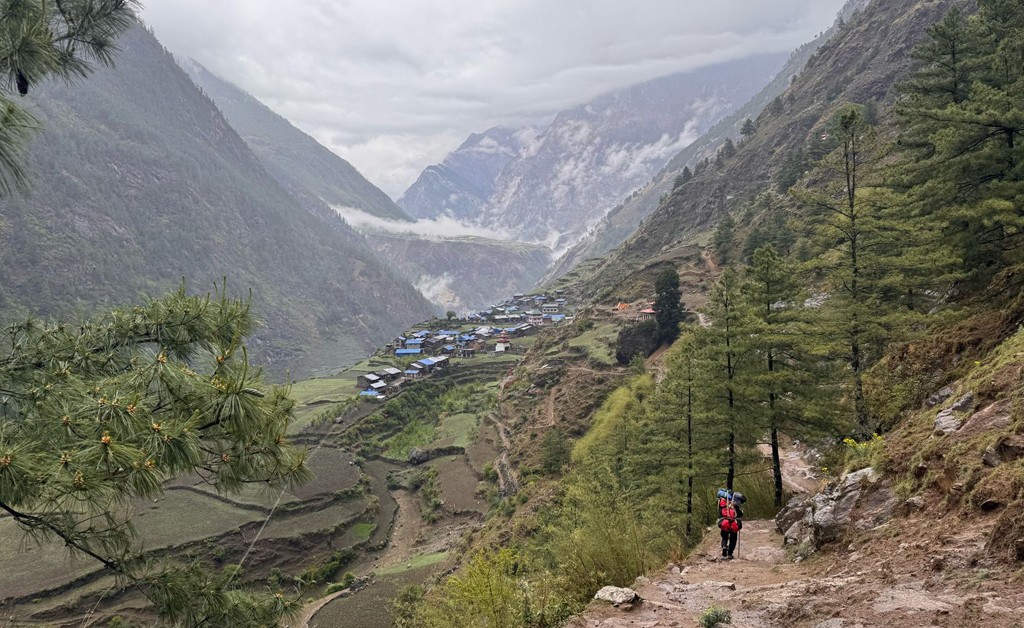
  • Encounters with traditional mountain villages and local lifestyles
  • Presence of ancient monasteries, prayer flags, and mani walls along the trail
  • Ideal combination of adventure, culture, and spirituality in one remote Himalayan journey.

Introduction to the Serang Gompa Trek

The Serang Gompa trek is a journey into one of Nepal’s most remote and breathtaking trekking regions, away from the crowds and commercialized areas, surrounded by majestic mountains and centuries-old Buddhist tradition. The Manaslu Circuit with Serang Gompa Trek leads you to the secluded monastery of Serang Gompa in the remote Himalayan region. It is also regarded as one of the finest high-altitude meditation centers, holding deep religious significance among the Tibetan Buddhist community. The Manaslu Circuit with Serang Gompa trek offers a peaceful and genuine experience, with opportunities to witness traditional mountain lifestyles, ancient religious practices, and pristine natural beauty. It is an ideal trek for those seeking solitude, spirituality, and a deeper connection with the Himalayas.

Serang Gompa is located in the northern part of Gorkha District, Nepal, within the Nubri region, north of the main Manaslu Circuit trail, in a remote Himalayan setting close to the Tibetan border. The monastery is situated in the lap of the Shringi Himal and is surrounded by major peaks such as Buddha Himal and Hiunchuli. Its high-altitude, isolated setting makes it difficult to access, which has helped preserve its untouched natural environment and strong spiritual atmosphere.

Serang Gompa is closely connected to Tibetan Buddhist traditions and monastic life, serving as an important meditation center for local monks and pilgrims. Because of its remoteness, cultural purity, and sacred significance, it is regarded as one of the most secluded and spiritually important Buddhist sites in the entire Manaslu region.

History of Serang Gompa Trek

Serang Gompa is an ancient monastery deeply influenced by Tibetan Buddhism for centuries. Serang Gompa was likely built many centuries ago. It was not a normal monastery, but a quiet place in the high mountains where Buddhist monks went to live, meditate, and focus on their spiritual practice in peace and isolation. As Serang Gompa is located near the Tibetan border, Tibetan culture and religion have strongly influenced the monastery and its daily practices.

Over time, Serang Gompa became very important for the people living in the Nubri Valley. These local communities practice Tibetan Buddhism and use the monastery for prayers, rituals, and other spiritual activities. It was not only a place for prayer and worship, but also a center where monks taught Buddhist teachings, practiced meditation, and preserved sacred religious texts and traditions in a quiet and isolated environment. The surrounding villages grew and developed closely alongside the monastery, with their way of life being strongly guided by Buddhist teachings and traditions.

The trekking route to Serang Gompa, however, is a more recent development in tourism. It was opened for adventurous trekkers who wanted to explore off-the-beaten-path destinations beyond the popular Manaslu Circuit. While the trekking trail is modern, the culture, history, and spirituality of the region are ancient, making the Manaslu Circuit with Serang Gompa Trek a unique mix of historical heritage and untouched Himalayan experience.

Why Choose Serang Gompa Trek?

The Serang Gompa Trek is an excellent choice for travellers seeking a meaningful, less commercialised Himalayan experience. One of its main attractions is the ancient Buddhist monastery experience, where Serang Gompa offers a glimpse into centuries-old spiritual traditions still actively practiced today. The trek also allows you to explore authentic Tibetan culture, as the Nubri Valley preserves its unique customs, lifestyle, and deep Buddhist influence.

Unlike popular trekking routes, this journey follows an offbeat and peaceful trail, providing solitude, silence, and a closer connection with nature. Along the way, trekkers are rewarded with scenic Himalayan views, including stunning snow-capped peaks, deep valleys, and untouched landscapes. Most importantly, the entire region is filled with a spiritual atmosphere, where prayer flags, mani walls, and chanting monasteries create a deeply calming and uplifting experience throughout the journey.

Why the Serang Gompa Trek is Perfect for Cultural Travelers

The Manaslu Circuit with Serang Gompa Trek is much more than a mountain adventure; it is a meaningful cultural trip that offers deep insight into Himalayan Buddhism and traditional mountain life.

Experience Authentic Himalayan Buddhism

This trek presents a unique chance to explore the hidden Buddhist heritage of the Manaslu region, where historic monasteries and sacred sites indicate the deep influence of Tibetan Buddhist traditions. Along the route, you can observe monks engaged in daily rituals, prayer ceremonies, and meditation practices. As a result, the trip becomes not only a physical expedition but also a culturally and spiritually enriching experience.

Rich Cultural Encounters

Along the trail, you are offered a unique opportunity to experience authentic Himalayan village life in its most traditional form. You can interact with local communities that continue to preserve age-old customs, language, and lifestyles that have been inherited through generations in remote mountain settlements.  Through homestays, local hospitality, and culture, you get a deeper knowledge of the endurance and traditions of the Himalayan people that make your journey both culturally rewarding and full of adventure.

Untouched Natural Landscapes

The trekking route goes through tranquil and less-traveled terrain that offers pristine Himalayan scenery far from the busy and commercial trekking routes. This feeling of remoteness allows you to fully engage with the natural surroundings, where mountains, forests, rivers, and valleys remain largely untouched by modern development. The trek will be more intimate and reflective, as it is off the beaten path, offering not only visual beauty but also a strong sense of peace and escape into the wilderness.

A Journey of Quiet Reflection

Serang Gompa is recognized as one of Nepal’s hidden gems for those seeking spirituality, cultural richness, and the untouched beauty of the remote Himalayas. The journey provides a rare opportunity to connect deeply with both nature and local traditions. The peaceful environment with prayer sites along the route can create a peaceful atmosphere that encourages inner reflection. The trek becomes a meaningful experience that combines adventure with cultural insight and personal tranquility.
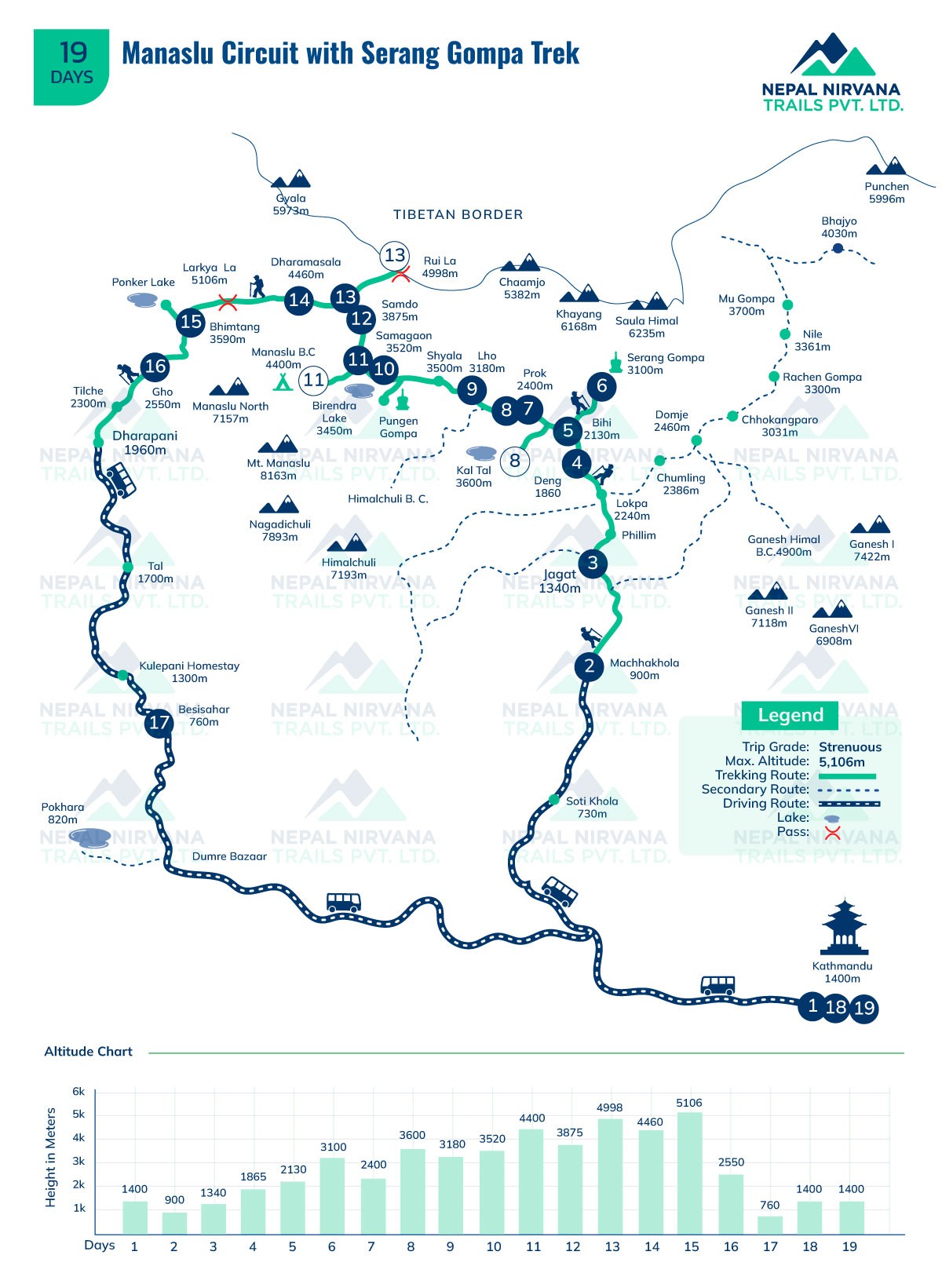
Itinerary

Day 1: Arrival in Kathmandu (1400m.|4593ft.)
Day 2: Drive to Machha Khola (900m.|2953ft., 8 - 9 hrs)
Day 3: Trek to Jagat (1340m.|4396ft., 10-11 hrs trek)
Day 4: Trek to Deng via Phillim (1865m.|6102ft., 6 - 7 hrs trek)
Day 5: Trek to Bihi Village (2130m.|6988ft, 3 hrs) 
Day 6: Trek to Serang Gompa: Overnight stay at the Monastery (3100m.|10170ft., 5 - 6 hrs)
Day 7: Trek to Prok (2400m.|7874ft., 5 - 6 hrs)
Day 8: Hike to Kal Tal, back to Prok (2400m.|7874ft., 5 - 6 hrs)
Day 9: Trek to Lho Village (3180m.|10433ft., 5 - 6 hrs)
Day 10: Trek from Lho to Sama Gaon (3520m.|11549ft., 4-5 hrs) 
Day 11: Acclimatization day in Sama Gaon, Side Trip to Manaslu Base Camp or Pungen Gompa.
Day 12: Trek to Samdo (3875m.|12713ft., 3 - 4 hrs trek)
Day 13: Acclimatization day in Samdo, Side Trip to Rui La Pass, Tibetan Border (4998m.|16397ft.)
Day 14: Trek to Dharamsala (4460m.|14633ft., 4 - 5 hrs trek)
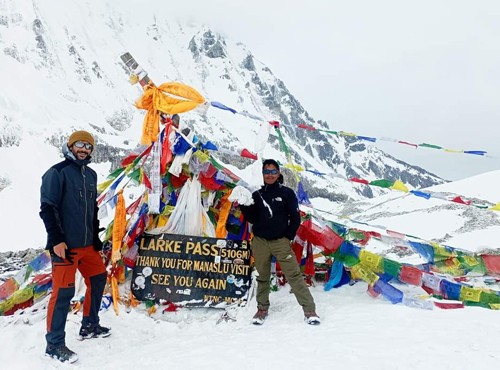
Day 15: Trek to Bhimtang (3590m.|11775ft. ) via Larkya La (5106m.|16751ft., 8 - 9 hrs trek)
Day 16: Hike to Ponker Lake, then trek to Goa (Gho) (2550m.|8367ft)
Day 17: Trek to Dharapani, drive to Besisahar
Day 18: Drive to Kathmandu/Pokhara (5 - 6 hrs drive)
Day 19: Depart from Kathmandu

Day to Day Details

Expand AllCollapse All

  • Subhatara Suites and Spa
  • (1400m.|4593ft.)

  • Tea houses
  • Breakfast, Lunch and Dinner
  • (900m.|2953ft.)

  • Teahouses
  • Breakfast, Lunch and Dinner
  • (1340m.|4396ft.)

  • Teahouses
  • Breakfast, Lunch and Dinner
  • (1865m.|6102ft.)

  • Teahouses
  • Breakfast, Lunch and Dinner
  • (2130m.|6988ft.)

  • Teahouses
  • Breakfast, Lunch and Dinner
  • (3100m.|10170ft.)

  • Teahouses
  • Breakfast, Lunch and Dinner
  • (2400m.|7874ft.)

  • Teahouses
  • Breakfast, Lunch and Dinner
  • (2400m.|7874ft.)

  • Teahouses
  • Breakfast, Lunch and Dinner
  • (3180m.|10433ft..)

  • Teahouses
  • Breakfast, Lunch and Dinner
  • (3520m.|11549ft.)

  • Teahouses
  • Breakfast, Lunch and Dinner

  • Teahouses
  • Breakfast, Lunch and Dinner
  • (3875m.|12713ft.)

  • Teahouses
  • Breakfast, Lunch and Dinner
  • (4998m.|16397ft.)

  • Teahouses
  • Breakfast, Lunch and Dinner
  • (4460m.|14633ft.)

  • Teahouses
  • Breakfast, Lunch and Dinner
  • (3590m.|11775ft.)

  • Teahouses
  • Breakfast, Lunch and Dinner
  • (2550m.|8367ft)

  • Teahouses
  • Breakfast, Lunch and Dinner

  • Subhatara Suites and Spa
  • Breakfast and Lunch

  • Breakfast

Share your travel plans, and our experts will craft a fully customized journey just for you. From thrilling treks and adventure activities to cultural experiences and nature explorations, we create every detail for a safe, seamless, and unforgettable holiday in 2026.

What's Included

  • Airport transfer on arrival and departure
  • 2-night hotel in Kathmandu, including breakfast (Hotel Subhatara Suites and Spa or Similar): In case of a Pokhara drop-off after the trek, the last night booked for Kathmandu will be replaced by the hotel in Pokhara (Hotel Crystal Palace or similar)
  • Meals on the treks (Breakfast, Lunch & Dinner) 
  • 4 cups of tea or coffee per day
  • Fresh fruit each day, seasonal, available
  • Twin-sharing accommodation during the treks 
  • Professional English-speaking and first-aid trained Local trekking Guide and a porter
  • Guide and porters insurance, meals, accommodations, equipment, transportation, etc.
  • All applicable permits: ACAP, MCAP, local permit, and MANASLU Special or Restricted permits
  • Private Jeep from  KTM to Machha Khola 
  • Dharapani to Besisahar Local private jeep and Besisahar to Kathmandu/Pokhara Private jeep 
  • 4 Season Sleeping bag: if needed (to be returned)
  • Duffel bag for porter use, if needed (to be returned)
  • Water purification tablet
  • Nepal Nirvana Trails Trekking map 
  • First aid kit with basic medications
  • Rescue arrangements, if necessary
  • Luggage storage available for items not needed during the trek.
  • Official expenses, all local and government tax, and VAT.

What's Excluded

  • International flight tickets and Nepal entry visa
  • Lunch and Dinner, and extra-night hotel in Kathmandu/Pokhara  
  • Travel and health Insurance which cover emergency Rescues and evacuations
  • Personal expenses such as snacks, alcoholic and non-alcoholic beverages, bottled and hot water, WI-FI, hot shower, battery charging, etc.
  • Tips for trek guide and porter (it is appreciated)

Useful Info

Best time for the Serang Gompa trek

The best time to visit the Manaslu Circuit with Serang Gompa Trek is throughout the year; however, spring and autumn are considered the more preferable seasons to visit.

Spring season

Spring is considered one of the best seasons for the Manaslu Circuit with Serang Gompa Trek. At this time of year, the trails are filled with blooming rhododendrons, enhancing the beauty of the trail. The weather is relatively mild and pleasant, which makes long trekking days more comfortable. The combination of colorful scenery, favorable weather, and excellent visibility makes spring an especially rewarding and memorable time to experience the trek.

Autumn Season

Autumn is widely considered the most favorable trekking season in the Serang Gompa region. During this period, the weather remains stable and predictable, with clear skies that offer excellent visibility of the Himalayan peaks. The fresh mountain air makes it easier to see wide panoramic views, so the scenery looks clearer and more beautiful. Autumn also has good weather, and many Buddhist festivals and local cultural celebrations also coincide during this time.

Winter Season

Trekking is still possible during the winter season; however, the cold temperatures make the conditions considerably more difficult, particularly at higher elevations where snowfall is common. The routes are covered in snow or ice, which makes the walk more difficult and may require extra caution. Despite the cold, winter provides a rare and peaceful trekking experience with fewer crowds and exceptionally clear mountain views on stable weather days.

Monsoon Season

The monsoon season is generally not recommended for trekking in the Serang Gompa region due to heavy and continuous rainfall. During this period, trails often become muddy, slippery, and difficult to navigate, raising the risk. In addition, the possibility of landslides in certain sections can make travel unsafe and unpredictable. Visibility is also significantly reduced because of clouds and persistent rain, limiting mountain views and overall trekking enjoyment. As a result, you are recommended to avoid this season and prefer clearer and more stable weather periods for a safer and more rewarding experience.

Difficulty Level of the Serang Gompa Trek

The Manaslu Circuit with Serang Gompa Trek is considered a moderate-level trek; therefore, the trek is suitable for those who are physically fit and have some experience with hiking. Although the trek does not require any technical climbing skills, it can be physically demanding due to the altitude and long walking days. Since Serang Gompa is situated at an elevation of approximately 3,100 meters, the risk of altitude sickness is generally lower than on many high-pass treks. However, you may still experience mild altitude-related symptoms.

Besides, to complete the Manaslu Circuit with Serang Gompa Trek comfortably, you should have a good level of physical fitness and be capable of walking 5–7 hours per day, including gradual ascents and descents. In addition, having a basic understanding of altitude acclimatization is important, as it helps the body adjust gradually to higher elevations and reduces the risk of altitude-related discomfort.

Permits Required for the Serang Gompa Trek

For the Manaslu Circuit with Serang Gompa Trek, you are required to obtain several official permits due to the route passing through protected and restricted regions of the Manaslu Conservation Area. These include the Manaslu Restricted Area Permit and the Manaslu Conservation Area Permit (MCAP). These permits are issued by the relevant government authorities and will be arranged through Nepal Nirvana Trails. Since the region falls under a restricted trekking zone, it is also mandatory to be accompanied by a licensed guide. Independent trekking is not permitted under current regulations, as this rule helps guarantee both visitor safety and proper management of the fragile mountain environment and local communities.

Accommodation

Accommodation along the Manaslu Circuit with Serang Gompa trek is simple yet deeply authentic, focusing on essential comfort rather than luxury. Along the trail, you stay in small, family-run teahouses that provide basic but reliable shelter, warmth, and home-cooked meals in remote Himalayan villages, offering a rare and intimate glimpse into the traditional mountain way of life. The lodges are modest and functional, typically offering twin-sharing rooms, shared bathrooms, and simple communal dining halls where trekkers gather after long days on the trail. As altitude increases, facilities become increasingly limited and more basic, reflecting the remoteness and rawness of the high Himalayas. Internet and electricity are often inconsistent or unavailable at higher elevations, making power banks an essential companion for charging devices. Yet this lack of modern connectivity only deepens the sense of isolation and presence in the moment. In return, the lodges are set against breathtaking Himalayan backdrops, where towering peaks, dense forests, and flowing rivers surround you in every direction.

Serang Gompa altitude

Serang Gompa is located at an approximate altitude of around 3,100 meters (10,170 feet) above sea level in the Manaslu region of Nepal. The environment falls within the lower alpine zone, where the air becomes noticeably thinner compared to Kathmandu at this elevation. However, breathing may feel slightly more difficult as temperatures may drop significantly, particularly during the night and early morning. Although the altitude is moderate, mild symptoms of altitude sickness, such as headaches or fatigue, can occasionally occur in sensitive individuals, so proper acclimatization and a steady trekking pace are important.

Weather and Temperature at Serang Gompa

 Season

Temperature range

Pros

Cons

Spring (March–May)

Day: 8°C to 15–20°C
Night: 3°C to 8°C

Blooming rhododendron forests, pleasant weather, clear Himalayan views

Unpredictable weather with occasional rain, muddy and slippery trails

Autumn (September–November)Day: 10°C to 18°C
Night: 0°C to 5°C

Best weather stability, crystal-clear mountain views, comfortable trekking conditions

Cold mornings and nights, heavy tourist flow on popular trekking routes nearby
Winter (December–February)Day: 0°C to 8°C
Night: -10°C or lower
Very clear skies and stunning mountain views, peaceful trails, fresh snow sceneryVery cold mornings/nights, snow at higher elevations
Monsoon (June–August)Day: 10°C to 16°C
Night: 5°C to 10°C
Lush green landscapes and very vibrant scenery, more dramatic waterfalls and riversHeavy rain and leeches, slippery and muddy trails, frequent clouds and fog

Cultural Importance of Serang Gompa

Serang Gompa is strongly rooted in Tibetan Buddhist tradition, which is clearly reflected in its daily rituals and the sacred structures found within the monastery complex. Regular prayer ceremonies are performed by monks, helping to create a calm and continuous spiritual rhythm. Inside the monastery, you can notice holy Buddhist murals, statues, and richly described religious artworks that reflect centuries of devotion and artistic heritage. The traditional monastic lifestyle is actively maintained, with monks dedicating their daily routine to prayer, study, and meditation. Mani walls and prayer wheels are frequently seen around the monastery and the trekking routes, which represent prayers for peace, compassion, and the protection of all living beings. Serang Gompa, with its tranquil environment and divine atmosphere, is not just a trekking attraction but also a place for inner peace, cultural understanding, and spiritual connection.

Flora and Fauna of the Manaslu Region

Biodiversity Around Serang Gompa

The Manaslu Conservation Area is known for its diverse  Himalayan biodiversity and supports a wide range of flora and fauna around the Manaslu Circuit with Serang Gompa region. This diverse ecosystem is defined by sharp changes in altitude, temperature, and climate, which in turn create distinct ecological zones within a short distance. As you ascend through the region, you pass through forested terrain, alpine meadows, and rugged high-altitude landscapes. These changing environments provide a natural habitat for a variety of rare and unique species found in the high mountains of Nepal. The lower regions are typically covered with dense forests, while higher elevations slowly shift into minimal vegetation and alpine terrain. This ecological diversity not only enriches the natural beauty of the trek but also determines the importance of conservation in protecting the fragile Himalayan ecosystem.

Wildlife

The Serang Gompa region within the Manaslu Conservation Area is home to several rare and iconic Himalayan species, which is an important area for biodiversity. Among the most notable animals are the Himalayan tahr, blue sheep, and musk deer, which are commonly found in the region. These species are well-suited to the extreme climatic conditions of the Himalayas and play an important role in protecting the environmental balance of this region. At higher altitudes, the elusive snow leopard is the most famous but rarely sighted predator, known for its stealth and survival in extreme cold and remote alpine zones. In addition to these mammals, the region also supports a variety of bird species and smaller wildlife.

Vegetation

The vegetation in the Manaslu Circuit with Serang Gompa region varies widely with altitude, forming a rich and constantly shifting natural landscape throughout the trek. In the lower elevations, the route is surrounded by dense pine forests, along with a variety of mixed hardwood species that provide shade and support rich wildlife habitats. As you ascend, these forests gradually transition into rhododendron zones, especially striking during the spring season. Further uphill, the vegetation becomes wider, which gradually gives way to open alpine meadows covered with seasonal grasses and hardy shrubs adapted to cold and windy conditions. At the highest elevations, the landscape turns into rugged Himalayan terrain with very little vegetation, where only the most resilient plant species are able to survive.

Essential Packing List for the Serang Gompa Trek

  • Down jacket for cold temperatures

  • Thermal base layers for warmth

  • Waterproof jacket for rain and wind protection

  • Comfortable trekking pants

  • Sturdy hiking boots with a good grip

  • Trekking poles for stability on uneven trails

  • Sleeping bag suitable for cold conditions

  • Durable backpack

  • Water purification tablets or a filter

  • Sunscreen for UV protection

  • Basic first aid kit

  • Power bank for charging devices when electricity is limited

Similar Trips

Ask a Question

help
Need help?

Start planning your 2026 Nepal adventure today! Talk to our local experts and create a trekking or travel experience you’ll never forget.