Pikey Peak Trekking - 8 Days

(5.0)3 reviews
Know before you go
  • Duration 8 Days
  • Difficulty Level Moderate
  • Trip Start and End Kathmandu to Kathmandu
  • Best Season Sep To Dec and Jan to May
  • Trip Area Lower Everest Region
  • Maximum Altitude 4065m.|13333ft.

Highlights

  • Easily accessible trekking route in lower Solukhumbu. 
  • Amiable trekking route for beginners and aged people.
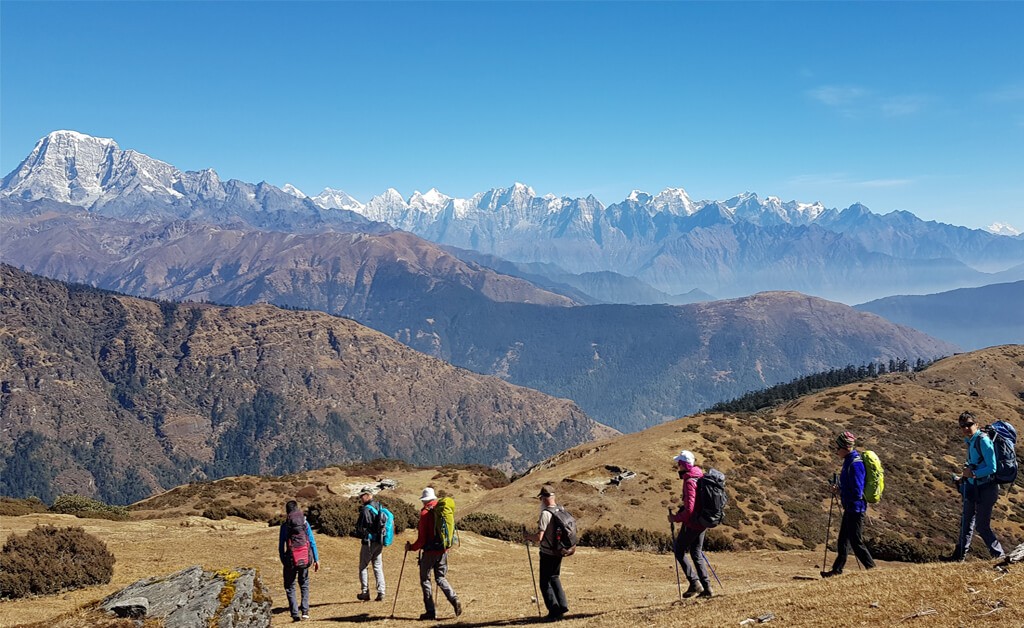
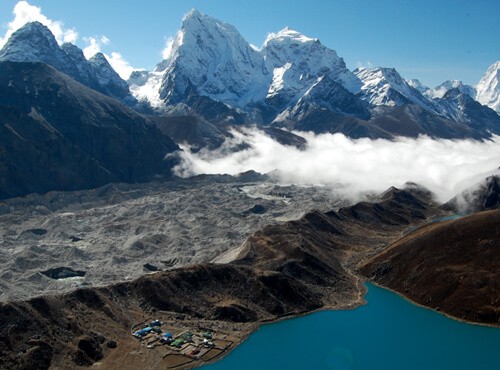
  • Have a spectacular panoramic view of the high mountains.
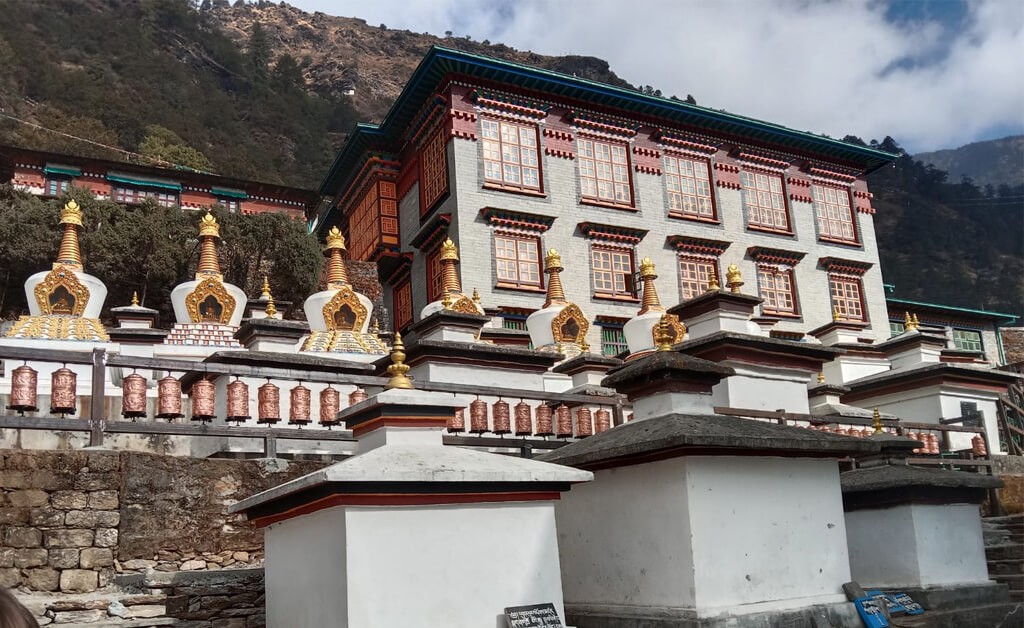
  • Embark on the Sherpa Culture and monasteries. 
  • Enjoy trekking on a less crowded route. 
  • Have a captivating experience of culture, rhododendron, and the Himalayas. 

Pikey Peak is an emerging new trekking area in the Solukhumbu district, part of the lower Everest region. It portrays the panoramic, 360-degree sight of the lush Himalayas from a distance. From its base camp, the Pikey Peak Trek offers the most beautiful vistas of seven mountains rising beyond 8000 meters above sea level. It's claimed by several trekkers Pikey Peak base camp is one of the best viewpoints to have as a sight of the mountain peaks. Every age group can complete this trek which is also doable in almost all seasons. The trekking trail can be completed without prior experience and no necessity for any equipment.

The Pikey Peak Trekking offers a fascinating route inside the rhododendron forest, which will overwhelm us from the start of the walk and in contrast to the beautiful mountain views. The religious tradition of the Sherpa holds great significance, and the trekking routes pass by Buddhist monasteries and Sherpa villages. From every angle, the Himalayas' lush mountainous scenery, rhododendron forest, and culture will be enough to make a lifelong memory.

Pikey peak is one of the best options if you are seeking escape from your busy life but want a budget trekking route involving public road transport and embark on the cultural hindsight of the trekking route. 

The trekking will be starting from Kathmandu as we begin our journey to Bamti Bhandar. Bamti Bhandar is a small settlement in Ramechhap District that will serve as our first stopover. We will start walking on the second day, via the route of the lower hills of Ramechhap and Solukhumbu districts of Nepal. 

You learn much about Sherpa customs and traditions while trekking through the villages. The trail also passes through Tamang, Rai, Limbus, Chhetri, and other communities. Stupas, prayer wheels, and flags are also featured throughout the route. The entire trip is incredibly spectacular and provides a once-in-a-lifetime experience.

The Major Attractions

Spectacular Views of the Himalayas 

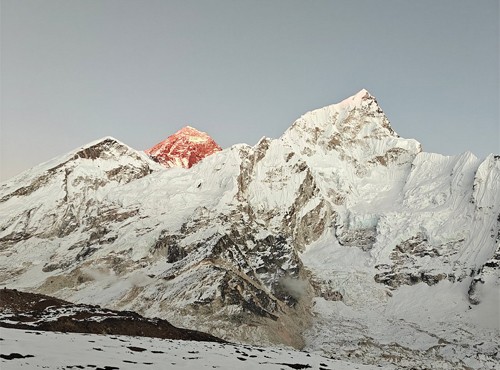
The eight-thousanders Everest (8,848.86m), Lhotse (8,516m), Kanchenjunga (8,586m), Makalu (8,463m), etc. can be seen in stunning detail from Pikey Peak. The perk of mountains is they look pleasant when they are closer. Pikey Peak is the best trekking vista, which has alluring views from the farsight. During the trek, hikers can also observe other mountains including Thamserku (6,608 m), Nuptse (7,861 m), Pumori (7,161 m), Kangtega (6,782 m), and others.
The landscapes and captivating greenery of the remote Solukhumbu district are so fascinating that you might want to stay there forever. 

Explore different cultures and traditions

The Pikey Peak Trekking passes through towns where a variety of ethnic groups have settled. The distinctive Sherpas are centered in the Solukhumbu area, but the Lower Khumbu region is home to other Buddhist followers, including Rai, Limbu, and Tamangs, as well as Hindus like Brahmins and Chhetris. Along the same trekking route, we will get the chance to experience and learn about diverse cultures, traditions, faiths, and languages. For those who desire to understand more and interact with more people to further their knowledge, this will be an engaging educational and knowledgeable trekking trail.

Trekking through silent roads 

You will experience the quiet roads at the short Pikey Peak trekking trail throughout the season because not many individuals know about this path. You may encounter with few locals, domestic trekkers, and foreign trekkers throughout the trek. Therefore, setting off on the mystical landscapes and breathtaking mountain views will be a tremendous experience.

Rhododendron Forests 

Trekking to pikey peak will take us through the rhododendron forest. Rhododendrons bloom in the late winter and early spring and spread their aura all over. Anyone who goes trekking will be fascinated by the tranquil environment and the color scheme of the flowers and greenery.

Itinerary

Day to Day Details

Expand AllCollapse All

Your journey begins with a long but scenic drive from Kathmandu to Bamti Bhandar. Some sections of the road are smooth while others can be rough and bumpy, especially closer to the Solu region. During the drive, you’ll already start seeing distant mountain landscapes and experience the quieter rural lifestyle of Nepal. After 8–10 hours on the road, you finally reach Bamti Bhandar, a peaceful hill village surrounded by green hills and local farms.


  • Tea House
  • Breakfast, Lunch and Dinner
  • 2990m.|9810ft.

The real trekking adventure starts today. As you continue walking toward Namkheli and further to Naur, the scenery becomes more open, and the mountain atmosphere starts to feel stronger. Along the route, you’ll meet local villagers, yak caravans, and experience the calm rhythm of life in the Solu region. The trail is moderately challenging with several uphill sections, but the beautiful landscapes make the walk enjoyable.

  • Tea House
  • Breakfast, Lunch and Dinner
  • 3350m.|10990ft.

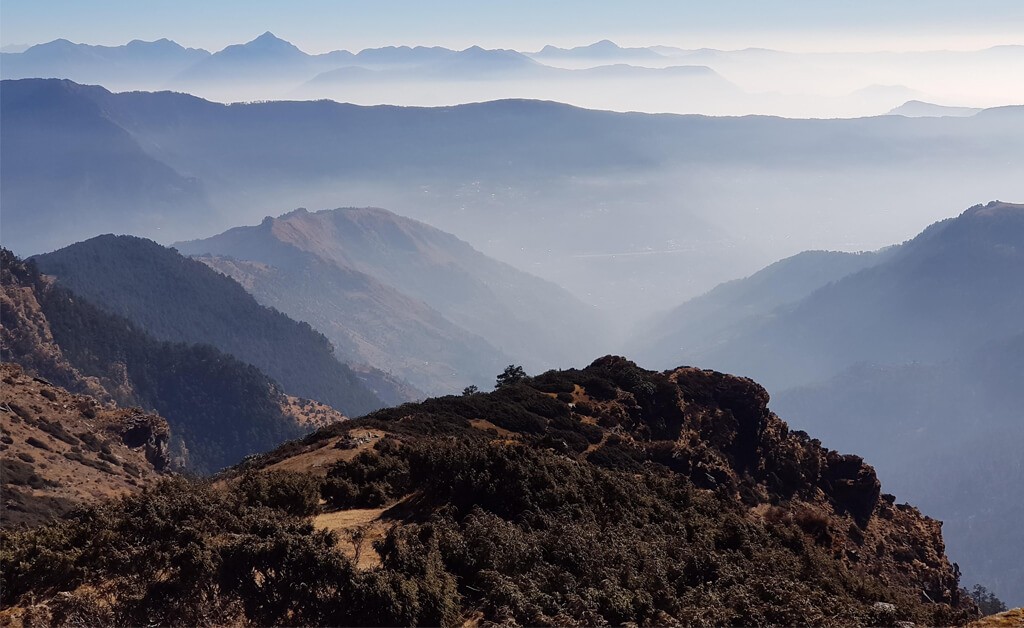
Today’s trek takes you higher into alpine landscapes. The trail passes through rhododendron forests, grazing fields, and open ridges with wide Himalayan views beginning to appear. By the time you reach the base camp area, you’ll be surrounded by rolling green hills and dramatic mountain scenery, creating a perfect atmosphere before the big viewpoint hike the next morning.

  • Tea House
  • Breakfast, Lunch and Dinner
  • 3640m.|11942ft.

This is one of the most exciting days of the trek. You start early in the morning and hike uphill to Pikey Peak viewpoint. From the top, you can enjoy an incredible panoramic sunrise view over the Himalayas, including Mount Everest, Kanchenjunga, Makalu, and many other snow-covered peaks. After spending some time at the viewpoint, the trail continues along beautiful ridges and forest paths toward Lamjura Danda or Jase Bhanjyang. The day includes both uphill and downhill walking, making it a long but very rewarding trekking day.

  • Tea House
  • Breakfast, Lunch and Dinner
  • 4068m.|13333ft.

Today’s walk is mostly downhill through peaceful forests and traditional Sherpa villages. As you descend toward Junbesi, the valley opens up beautifully with farms, stone houses, and surrounding green hills. Junbesi is one of the most charming Sherpa villages in the region and offers a warm local atmosphere with stunning scenery all around.

  • Tea House
  • Breakfast, Lunch and Dinner
  • 2700m.|8859ft.

This day is more cultural and peaceful compared to the previous trekking days. The trail climbs gradually through forests and hillside paths toward Thupten Chholing Monastery, one of the largest Tibetan Buddhist monasteries in Nepal. Along the way, you’ll hear prayer chants, see colorful prayer flags, and experience the spiritual side of the Himalayas. After exploring the monastery area and enjoying the peaceful surroundings, you trek back down to Junbesi.

  • Tea House
  • Breakfast, Lunch and Dinner
  • 2700m.|8859ft.

The trail today passes through forests, suspension bridges, and several traditional villages as you gradually descend toward Phaplu. You’ll walk through Chiwang village, known for its monastery and local Sherpa culture. The lower altitude brings warmer temperatures and greener landscapes again. Compared to the higher sections near Pikey Peak, today feels more relaxed and comfortable.

  • Tea House
  • Breakfast, Lunch and Dinner
  • 2413ft.|7916ft.

After finishing the trek, you take a long drive back to Kathmandu. The journey follows winding mountain roads through hills, rivers, villages, and terraced farmland. It’s a great time to relax, look back on the trekking adventure, and enjoy the final views of rural Nepal before returning to the busy capital city. After 10–11 hours of travel, you arrive back in Kathmandu with unforgettable memories of the beautiful Pikey Peak region.

  • Breakfast and Lunch

Share your travel plans, and our experts will craft a fully customized journey just for you. From thrilling treks and adventure activities to cultural experiences and nature explorations, we create every detail for a safe, seamless, and unforgettable holiday in 2026.

Route Map

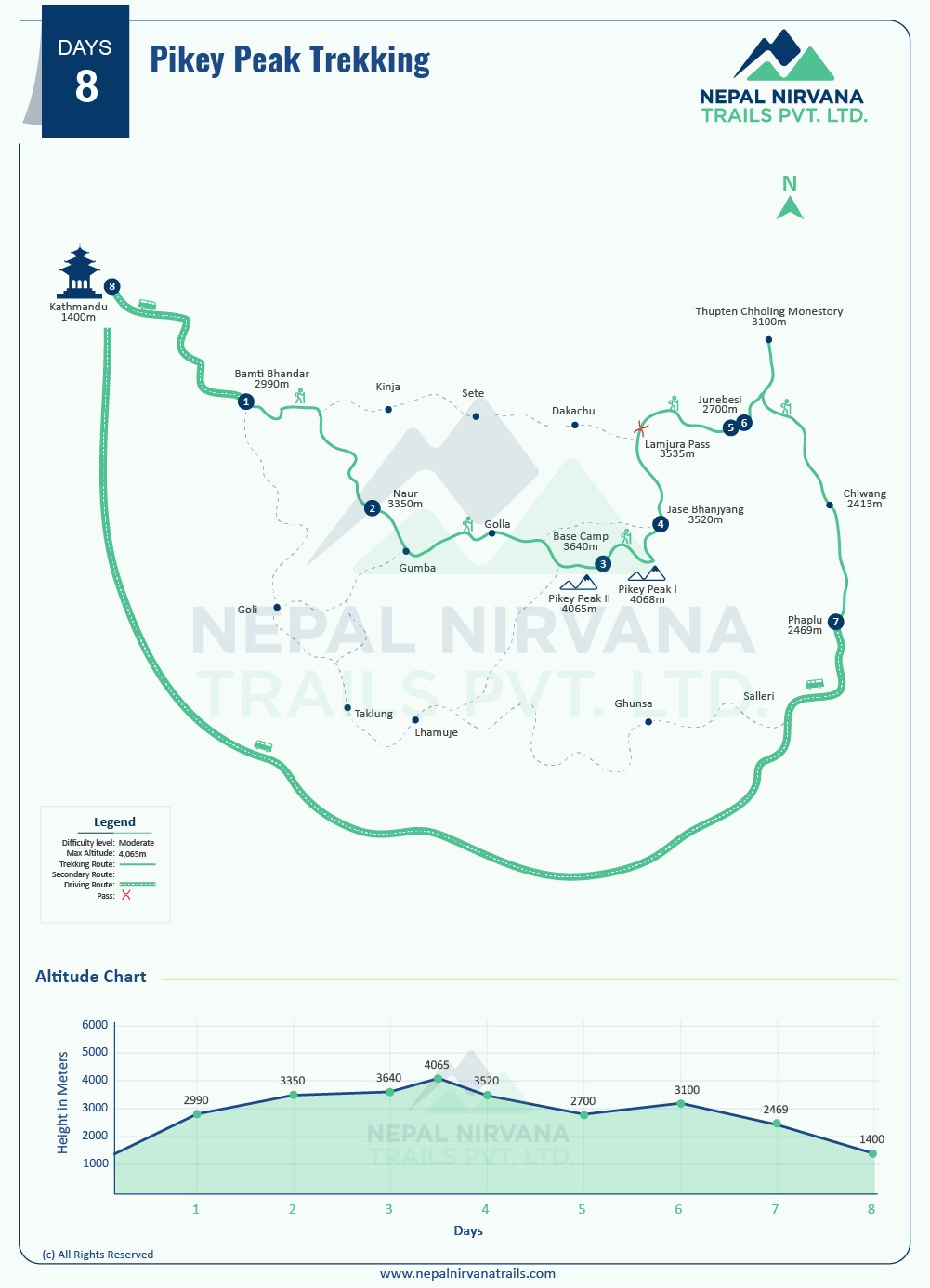
Pikey Peak Trekking - 8 Days map

What's Included

  • Meals (Breakfast, Lunch, and Dinner) while trekking
  • Teahouse accommodation during the trek
  • Experienced English - speaking government Licensed trekking guide 
  • Guide salary, food, equipment, and insurance
  • All applicable National park and Local permits
  • Kathmandu to Bamti Bhandar and Phaplu to Kathmandu bus drive
  • Sleeping bag and down jacket (to be returned after the trek)
  • Trekking map, and Water purifications tablet
  • Official expenses and government tax and vat.

What's Excluded

  • International flight tickets
  • Nepal entry visa
  • Travel and health Insurance covering emergency Rescues and evacuations
  • Personal expenses like snacks, alcoholic and non-alcoholic beverages, bottled water, WI-FI, battery charging, hot shower, etc.
  • Food and Hotel in Kathmandu
  • Tips for treks guide and porter (it is appreciated)
Add-Ons & Options

The package provides an affordable way for budget-conscious trekkers to explore the Khumbu Region. However, there is also the option to enhance your experience with add-ons to the package.

Porter Service

You have the option to include a porter in addition to your guide. The porter carries a load of up to 20 - 25 kilograms. You can share your heavier belongings with the porter, allowing you to trek more comfortably and with your trekking guide's guidance. 

One Porter Costs: USD 200

Private Transportation

We offer shared local jeep transportation between Kathmandu to Bamti Bhandar and Phaplu to Kathmandu with the package.

Alternatively, you can opt for private transportation for an additional fee, which covers the journey from Kathmandu to Bamti Bhandar and Phaplu to Kathmandu. 

Private Jeep: Kathmandu to Bamti Bhandar Costs: USD 250 

Private Jeep: Phaplu to Kathmandu Costs: USD 250 

Upcoming Departures

    
Start DateTuesdaySeptember 22, 2026End DateTuesdaySeptember 29, 2026PriceGuaranteedUS $549
Start DateFridaySeptember 25, 2026End DateFridayOctober 02, 2026PriceGuaranteedUS $549
Start DateMondaySeptember 28, 2026End DateMondayOctober 05, 2026PriceGuaranteedUS $549
Start DateTuesdaySeptember 29, 2026End DateTuesdayOctober 06, 2026PriceGuaranteedUS $549

Useful Info

Permits Required for Pikey Peak Trek

The Pikey Peak Trek in Nepal is a relatively untouched and less-commercialized trekking route, and no special trekking permits are required for the standard Pikey Peak trekking route. Unlike popular treks such as Everest Base Camp and the Annapurna Circuit, Pikey Peak does not require national park entry permits, making it a natural pick for anyone trying to keep costs down while still chasing a Himalayan experience that feels genuinely off the beaten path.

Best Time to Visit Pikey Peak Trek

Nepal's Himalayan region can technically be trekked year-round, but it's really the peak seasons that give you the most memorable, immersive experience. Even outside the peak season, Pikey Peak has a quiet beauty of its own, and the trek remains just as charming and rewarding throughout the year. The Pikey Peak Trek is best visited during the Spring (March to May) and Autumn (September to December). While

Pikey Peak Trek in the Spring season (March to May)

The real nature of this stunning Himalayan valley comes alive during one of its peak seasons, i. e., spring.  It's a wonderful time for trekking, with long, sunny days, mild temperatures, and clear, stable weather that doesn't shift dramatically. During the day, temperatures generally range between 10°C and 15°C, dropping to as low as -7°C to -5°C at night and in the early morning hours. The lush forests lining the trail, the delicate fragrance of blooming rhododendrons, and the Himalayan landscape bursting into life at its finest season create an atmosphere of renewal. Together, these natural wonders make the Pikey Peak Trek a memorable journey that lingers in your heart long after you have descended from the mountains.

Pikey Peak Trek in the Autumn season (September-November)

Autumn is another ideal season for trekking in the Pikey  Peak Trek , offering pleasant weather, crisp mountain air, and unobstructed views of the magnificent Himalayan peaks. The season also coincides with some of Nepal’s biggest festivals, making it an especially rewarding time for trekkers and nature enthusiasts who want to experience the country’s rich cultural traditions alongside the beauty of the Pikey Peaks. During autumn, daytime temperatures generally range from 7°C to 15°C, while nighttime and early-morning temperatures can drop to around 1°C to -13°C at the coldest points. As autumn progresses toward the end of November, temperatures gradually fall, bringing increasingly colder conditions to the Gokyo Valley.

Pikey Peak Trek in the Winter Season ( December-February)

By mid-December, winter begins to settle over the Pikey Peak region, bringing colder temperatures, chilly winds, and occasional snowfall. The weather becomes particularly cold during December and January, and snow may cover sections of the trekking trail. While the crisp winter atmosphere can create beautiful Himalayan views, heavier snowfall may reduce visibility and make some sections of the trail more challenging to navigate. You should therefore be prepared for freezing temperatures, icy paths, and changing mountain conditions during the winter season. By the end of January, the skies gradually become clearer, allowing the magnificent Himalayan scenery around Pikey Peak to emerge more distinctly.

Pikey Peak Trek in the Monsoon Season ( June- August)

Monsoon is considered one of the more challenging trekking seasons in Nepal, bringing frequent rainfall, muddy trails, slippery terrain, and occasional landslides. At lower elevations, you  may also encounter leeches, while persistent rain can make the journey more demanding. However, as this is an off-season period, the Pikey Peak trails are generally much quieter, allowing trekkers to enjoy a more peaceful experience away from the crowds. The surrounding mountains are often covered by mist and clouds during the monsoon due to heavy rainfall, which can limit panoramic Himalayan views. Despite these conditions, adventurous trekkers can still explore Pikey Peak with proper preparation. The season is relatively warm, with daytime temperatures generally ranging from 16°C to 22°C, creating milder conditions at lower elevations.

Accommodation on the Pikey Peak Trek Route

Accommodation along the Pikey Peak Trek mainly consists of small, family-run teahouses, lodges, and homestays. These simple yet comfortable setups give trekkers a place to rest and eat while experiencing the warm hospitality that local communities are known for.

Unlike the more developed Everest and Annapurna routes, the Pikey Peak trail winds through relatively remote villages, so accommodations here tend to be more basic. Most teahouses offer twin-sharing rooms with simple beds, mattresses, blankets, and shared bathroom facilities. A handful of lodges do have attached bathrooms, but these aren't guaranteed everywhere, especially at the higher, more remote settlements. As a quieter trekking destination, Pikey Peak tends to offer more peaceful, less crowded accommodation, giving visitors a chance to connect more closely with the local Sherpa culture and mountain communities.

Food on the Pikey Peak Trek

Food along the Pikey Peak Trek is mainly served at the local teahouses and lodges you pass through. Despite the trail's remote mountain setting, you can still enjoy a solid variety of traditional Nepali, Tibetan, and basic international dishes to keep your energy up throughout the journey.

The most popular dish is dal bhat, steamed rice, lentil soup, vegetables, pickles, and sometimes a curry on the side. It's a hearty, nutritious option well-suited to long days on the trail. Beyond that, teahouses commonly offer noodles, fried rice, pasta, momos, soups, Tibetan bread, pancakes, eggs, potatoes, and porridge, along with hot tea, coffee, and other warm drinks readily available throughout the route.

As you move into the higher, more remote stretches of the trail, food options tend to narrow due to transportation challenges and fewer facilities. That said, meals are still generally freshly prepared and provide enough fuel to keep you going.

Altitude Sickness on Pikey Peak Trek

Altitude sickness, or Acute Mountain Sickness (AMS), is a real consideration on the Pikey Peak Trek, since the route climbs above 4,000 meters, with Pikey Peak itself sitting at roughly 4,065 meters. The risk grows when ascent happens too quickly, not leaving your body enough time to adjust to the thinner air at higher elevations.

Common symptoms of altitude sickness include headaches, dizziness, nausea, fatigue, loss of appetite, and trouble sleeping. Mild symptoms are fairly common at high altitude and shouldn't be brushed off, since they can worsen if you keep ascending without addressing them.

To reduce the risk of altitude sickness, you should keep your ascent gradual and stick to a well-paced itinerary rather than rushing higher too quickly. Staying well hydrated throughout the trek is essential, as is cutting back on alcohol and smoking once you're at higher elevations. Even if your appetite drops, try to keep eating regular, nutritious meals to maintain your energy levels, and make sure you're getting enough rest without pushing yourself too hard. Most importantly, let your guide know right away if you start experiencing any symptoms, so they can help you respond before things escalate.

Travel Insurance

Travel insurance is highly recommended for the Pikey Peak Trek, given that trekking in the Himalayan region comes with unpredictable weather, remote trails, high-altitude conditions, and limited access to medical care. A good policy offers financial protection and peace of mind, so you're covered if anything unexpected comes up along the way.

Your policy should specifically cover trekking at high altitudes up to at least 4,100 meters, along with medical treatment and emergency evacuation. It's worth reviewing the fine print carefully to confirm it includes helicopter evacuation, emergency medical expenses, trip cancellation or interruption, lost or delayed baggage, and any other trekking-related emergencies that could come up.

Before setting out on the trek, it's a good idea to carry a copy of your insurance policy along with emergency contact details. Having comprehensive travel insurance in place means you're better prepared for whatever comes up unexpectedly, so you can focus on enjoying the Pikey Peak Trek itself.

Nepali Currency and ATMs

Nepal's official currency is the Nepalese Rupee (NPR).  Kathmandu has plenty of licensed money-exchange counters and banks where major foreign currencies can be converted, so before heading out on the Pikey Peak Trek, you should exchange enough cash there beforehand, since options for currency exchange become far more limited once you're on the trail.

While Kathmandu has no shortage of ATMs, the remote stretches of the Pikey Peak route don't offer reliable access to one. Since most teahouses, shops, and local vendors along the trail run on a cash-only basis once the trek gets underway, it's best to withdraw or exchange enough money in Kathmandu ahead of time to cover your expenses for the whole journey.

It's also worth carrying smaller denomination notes, since remote villages often have limited change on hand. Set aside some extra cash too for incidentals like hot showers, charging your devices, snacks, drinks, and tips. Having enough cash on you from the start makes the whole trek run a lot smoother and far less stressful.

Pikey Peak Trek  Packing List

Clothing

  • 2–3 pairs of trekking T-shirts
  • 1–2 pairs of long-sleeve shirts
  • 2 pairs of trekking trousers
  • 1 pair of thermal innerwear
  • 1 pair of thermal trousers
  • 1 warm fleece jacket
  • 1 down jacket
  • 1 waterproof and windproof jacket
  • 1 pair of waterproof trousers
  • 3–4 pairs of trekking socks
  • 2–3 pairs of underwear
  • 1 warm hat
  • 1 sun hat or cap
  • 1 pair of warm gloves

Footwear

  • 1 pair of comfortable trekking boots
  • 1 pair of lightweight sandals or slippers
  • 1 extra pair of trekking socks

Trekking Gear

  • 1 backpack (40–50 liters)
  • 1 rain cover for the backpack
  • 1 pair of trekking poles
  • 1 sleeping bag suitable for cold temperatures
  • 1 headlamp with spare batteries
  • 1 water bottle or hydration bladder
  • 1 pair of sunglasses with UV protection

Personal & Hygiene Items

  • Small personal first-aid kit
  • Water purification tablets
  • Quick-drying towel
  • Small toiletry kit
  • Wet wipes
  • Tissues or toilet paper
  • Bottle of hand sanitizer
  • Sunscreen

Documents & Electronics

  • Passport
  • Copy of travel insurance details
  • Mobile phone
  • Phone charger
  • Power bank
  • Universal travel adapter
  • Camera (optional)

Client Reviews

tptripadvisor
  • L
    LeonNetherlandsDecember 02, 2024

    Pikey Peak beautiful views

    We had a great trek with Bhairas as guide and Prajil as porter to Pikey Peak. We were extremely lucky with the weather and all the guidance given by Bhairas and Prajil, providing lots of insights. This is a memory we will not soon forget. The whole process of planning and communication was also very smooth.

    Dear Leon, Namaste!
    Thank you for sharing your wonderful experience trekking to Pikey Peak with Bhairas and Prajil. We are thrilled to hear that you had a memorable journey, blessed with great weather and insightful guidance from our team. Your kind words about our planning and communication process mean a lot to us. We hope to welcome you back for another adventure soon!
    Warm regards,
    KP Dhital and the Nepal Nirvana Trails Team
    WhatsApp: +977 9841380469

  • A
    AjayNetherlandsNovember 06, 2024

    Pikey Peak Trek

    Together with a friend we had a top trekking of 7 days. First of all, the contact and arrangements with the organization. Then transportation back and forth with a shared jeep. In addition, all the tea houses and facilities are excellent, and the people are extremely nice. The trek includes nature and culture, and the guide (Bhim) and porter were lovely helpful people.
    Until the next one!

    Dear Ajay, Namaste!
    Thank you so much for your kind words! We are thrilled to hear that you and your friend had an amazing 7-day trekking experience with us. It’s wonderful to know that the arrangements, transportation, tea houses, and the warm hospitality of the locals contributed to making your trip memorable. We’ll be sure to pass on your appreciation to Bhim and the porter. 
    We look forward to welcoming you again on your next adventure!
    Best regards,  
    KP Dhital and the Nepal Nirvana Trails Team  
    WhatsApp: +977 9841380469  

Similar Trips

Ask a Question

help
Need help?

Start planning your 2026 Nepal adventure today! Talk to our local experts and create a trekking or travel experience you’ll never forget.