Ama Dablam Base Camp with Gokyo Valley Trek-16 days

Know before you go

    Highlights

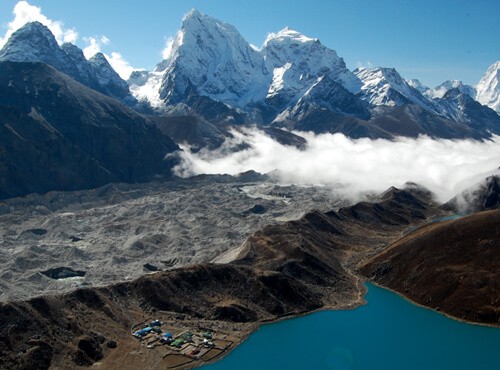
    • Explore the tranquil Gokyo Valley and witness the sunrise from Gokyo Ri
    • Discover Namche Bazaar, the Sherpa capital, offering cafes, shops, museums, and stunning Everest views.
    • Cross the iconic suspension bridges and travel through the ever-changing landscapes of the Himalayas
    • Explore Tengboche and Pangboche, revered as the Khumbu's oldest and most celebrated monasteries
    • The ideal trek to experience the heart of the Khumbu

    Ama Dablam Base Camp With Gokyo Valley Trek Overview

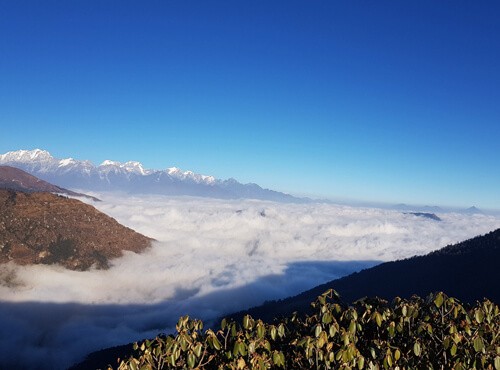
    The Ama Dablam Base Camp with  Gokyo Valley Trek offers an unforgettable journey through the Khumbu region, blending breathtaking mountain scenery, rich Sherpa heritage, and awe-inspiring vantage points at high altitude. The journey takes you through timeless Sherpa Villages, dense mountain forests, sweeping alpine valleys, and rugged glacial expanses, with breathtaking views of some of the world's tallest peaks.

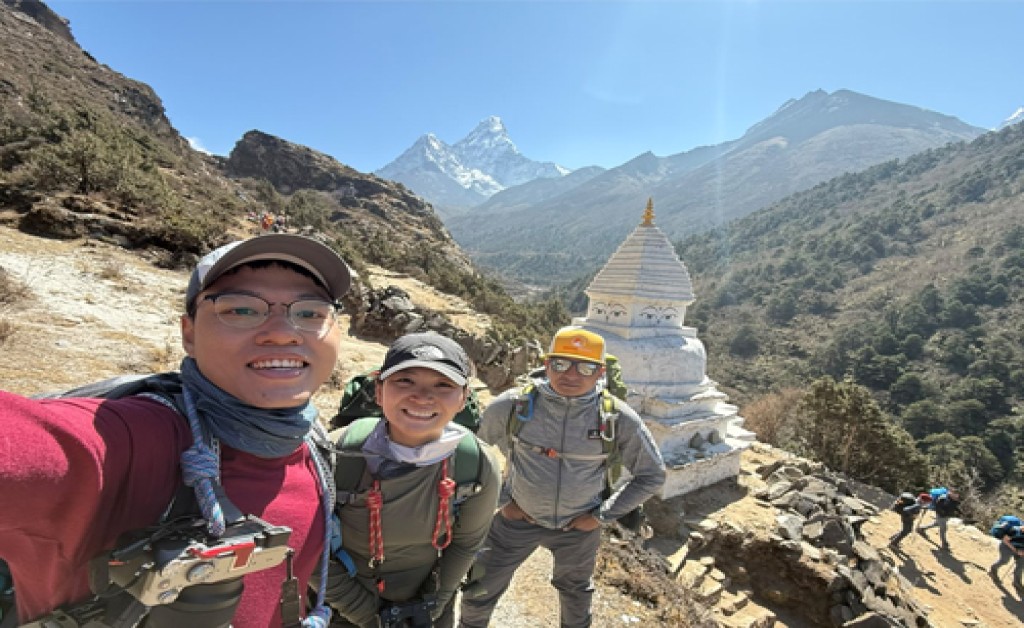
    Rising to 6,812 metres (22,349 ft), Ama Dablam is one of the most striking peaks in the Himalayas and offers an incredible mountain experience away from the busier trekking routes. The mountain’s name carries deep cultural meaning, with Ama Dablam translating roughly to “Mother’s Charm Box” in the Sherpa language. “Ama” means mother, while “Dablam” refers to a traditional double-pendant worn by Sherpa women. The mountain’s distinctive ridges are often imagined as a mother’s protective arms embracing her child, while the hanging glacier resembles the sacred dablam pendant.

    What makes the Ama Dablam with Gokyo Valley Trek special is its variety: soaring mountains, remote Sherpa settlements, glacier scenery, and stunning viewpoints all woven into a single route. Rather than following the crowded Everest Base Camp trail, it takes you off the main path into the Khumbu's more secluded areas.

    What Sets the Ama Dablam with Gokyo Valley Trek Apart?

    A Close Encounter with Ama Dablam

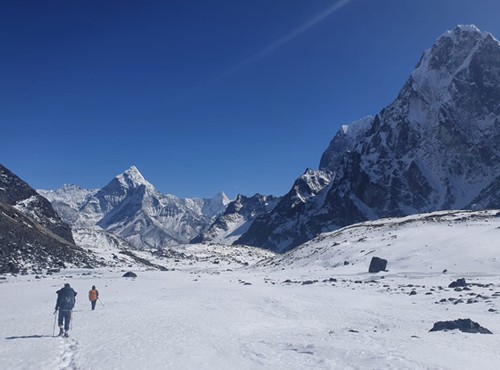
    Standing beneath Ama Dablam at its base camp is one of the trek's truly unforgettable moments. At 6,812 meters, Ama Dablam rises high above the Imja Valley with a quieter and more rugged mountain setting.At base camp, you’re surrounded by glaciers, rock faces, and towering peaks, with the vast Himalayan landscape stretching out in every direction. Ama Dablam’s snow-covered slopes rise above the valley, while the wide, open landscape makes the surroundings feel quiet and remote. With the thin mountain air and towering peaks all around, you really get a sense that you’ve reached the high Himalayas.

    The Turquoise Waters of Gokyo Lakes

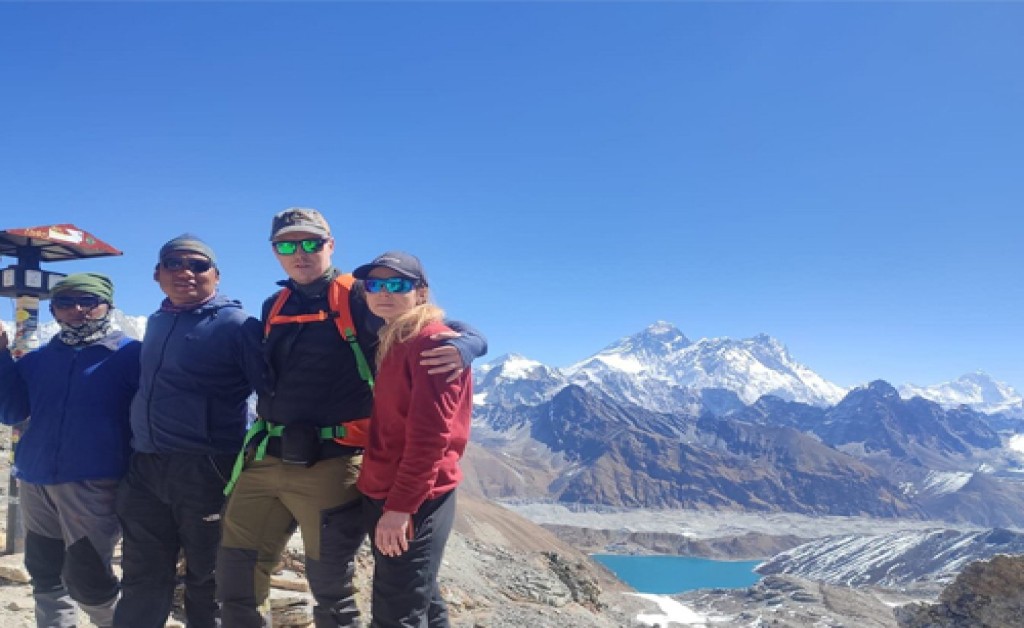
    The Gokyo Lakes are one of the highlights of the trek. The Gokyo Lakes are beautiful for their clear blue-green water, which stands out against the rocky slopes and snow-covered peaks around the valley. On a calm day, you can see the mountains reflected on the surface, making the lakes even more beautiful. Walking along the lakeshore in the quiet mountain air is a peaceful experience and one of those moments that stays with you after the trek. The lakes are also considered sacred by both Hindus and Buddhists, adding a special cultural meaning to the area.

    Sunrise Views from Gokyo Ri

    An early morning climb to Gokyo Ri is one of the highlights of the trek. As the sun begins to rise, its warm morning light slowly spreads across the Himalayan peaks, revealing the mountains one by one. From the top, you can enjoy wide views of Everest, Lhotse, Makalu, Cho Oyu, and the Gokyo Valley below. The cold morning air, quiet surroundings, and changing colors across the mountains make the early start well worth it.

    Conquering Renjo La Pass

    Crossing Renjo La Pass at around 5,360 meters is one of the most challenging parts of the trek. The climb is steep and demanding, especially in the thin mountain air, so it takes a steady pace and good acclimatization. As you reach the top, the effort feels worthwhile. You’ll be rewarded with wide views of the surrounding Himalayan peaks, valleys, and high mountain landscapes. Reaching the top of Renjo La feels like a real achievement. With the rugged mountains stretching out around you, it becomes one of the most memorable moments of the trek.

    Ama Dablam Base Camp with Gokyo Valley Trek Cost

    If you're planning the 2026/2027 Ama Dablam with Gokyo Trek, the standard 16-day package runs about USD  per person. The package covers teahouse lodging throughout the trek, all ground transport between Kathmandu and the trailhead, an experienced local guide, and three daily meals while on the trail.  Also, you'll need to cover your own travel insurance, any rescue or evacuation costs, and personal expenses like phone calls, drinks, and souvenirs.

    Beyond that baseline, your actual cost comes down to how much comfort you want. Sticking with basic teahouses, local meals, and no extras keeps things budget-friendly. Opting for more comfort- porters, Helicopter, and better rooms pushes the price up accordingly.

    Permits Required For The Ama Dablam Base Camp with Gokyo Valley

    This trek requires two permits: the Khumbu Pasang Lhamu Rural Municipality Entrance Permit and the Sagarmatha National Park Entry Permit. The table below lists the permit costs.

    Permit

    Cost

    Khumbu Pasang Lhamu Rural Municipality Entrance Permit

    NPR 3,000 per person

    Sagarmatha National Park Entry Permit

    NPR 3,000 per person

    Hiring A Guide And Porter For Gokyo Valley And Ama Dablam Base Camp

    For the Ama Dablam trek via Gokyo, our package includes a licensed guide, while hiring a porter is highly recommended to carry your luggage and make the trek more comfortable. They can truly change the whole experience for the better. A local guide knows the trail inside out, reads the weather, spots avalanche or landslide hazards, and is trained in first aid and rescue. In short, they act as both your safety net and your bridge to the local culture.

    Along this route, you'll face steep climbs and descents, remote trails, river crossings, narrow paths, and occasional snow or ice at higher elevations. Carrying a heavy backpack day after day can wear you down fast; that's where a porter makes a real difference.

    The fees for the guide and a porter generally cover their salary, meals, accommodation, and insurance. This ensures that your trekking staff is properly supported and fairly compensated throughout the journey.

    How to Book the Ama Dablam and Gokyo Valley Trek?

    To lock in your booking, just a 20% deposit of the total trek cost is needed. You can easily confirm your booking online through our official website using the available secure payment options. Along with the deposit, please provide a copy of your passport and, if available, your flight details. This allows us to make the necessary arrangements for your airport pickup, accommodation, permits, and trekking itinerary before your arrival in Nepal.

    The remaining balance can be paid conveniently after you arrive in Nepal, giving you the opportunity to complete your payment in person before the trek begins.
    Itinerary

    Day 1: Arrival in Kathmandu (1400 m | 4593 ft.)
    Day 2: Fly from Kathmandu to Lukla 30 minutes (2840 m | 9316 ft.), trek to Phakding (2610 m | 8563 ft.) (3- 4 hrs, trekking distance 8.2km/5.1 miles)
    Day 3: Trek from Phakding to Namche Bazaar (3440 m | 11286 ft.) (6- 7 hrs, trekking distance 10.9 km/6.8 miles)
    Day 4: Acclimatization at Namche Bazaar (3 to 5 hours of hiking per day)
    Day 5: Trek from Namche Bazaar to Tengboche (3860m.|12660ft.,6-7 hrs, trekking distance 9.6km/6 miles)
    Day 6: Trek from Tengboche to Pangboche (3,930 meters / 12,894 feet).
    Day 7: Trek from Pangboche to Ama Dablam Base Camp 4600 meterrs 15,092 feet Overnight: Pangboche Village
    Day 8: Trek from pangboche to Phortse Thanga(3,680m.|12,071ft.) (6 km, 5 - 6 hrs trek)
    Day 9: Trek Phortse Thanga to Machhermo(4470m.|14662ft.) (8 km, 5 - 6 hrs trek)
    Day 10: Trek Machhermo to Gokyo(4790m.|15711ft.) (6km, 3 - 4 hrs trek)
    Day 11: Acclimatization in Gokyo village, hike to Gokyo Ri (5360 m | 17580 ft.) (3.8 km, 3 - 4 hrs)
    Day 12:  Trek Gokyo to Lumde (4,368 m | 14,328 ft.) via Renjo La Pass (5,360 m | 17,581 ft.) (11.5 km, 8 - 9 hrs)
    Day 13: Trek Lumde to Namche Bazar(3,440m.|11,284ft.) (18 km, 7 - 8 hrs trek)
    Day 14: Trek Namche Bazaar to Lukla (2840m.|9318ft.) (19 km, 6 - 7 hrs trek)
    Day 15: Lukla to Kathmandu flight (1400m | 4593 ft.), (35 minutes Scenic Flight)
    Day 16: Final Departure

    Day to Day Details

    Expand AllCollapse All

      Share your travel plans, and our experts will craft a fully customized journey just for you. From thrilling treks and adventure activities to cultural experiences and nature explorations, we create every detail for a safe, seamless, and unforgettable holiday in 2026.

      Useful Info

      Difficulty Of The Ama Dablam with Gokyo Valley Trek

      The Ama Dablam Base Camp with Gokyo Valley Trek certainly lives up to its strenuous rating. The trail winds through peaceful forests and small mountain villages, with gentle climbs at first. As you climb higher, the route gradually becomes more rugged, leading through rocky alpine landscapes, glacier-carved terrain, and demanding high-altitude sections. Crossing the challenging Renjo La Pass adds another tough section to the trek, but it also brings some of the most rewarding mountain views.

      Most days call for roughly 5 to 7 hours of walking, with the challenge building steadily as you climb higher. The trek starts relatively gently, giving your body time to adjust to the changing terrain and altitude. But as you progress, the trails grow tougher, with steeper climbs, rocky footing, and longer stretches spent walking at higher elevations.  

      The Ama Dablam with Gokyo Valley Trek demands a solid baseline of fitness. No technical climbing ability is needed for this trek, but solid stamina and endurance matter a lot, since you'll be tackling steep ascents and descents while carrying a daypack. Having trekked before can help, though it's not a requirement. Staying active beforehand through hiking, running, swimming, cycling, or similar cardio-focused activities is a good way to build up the fitness needed for the trail's physical challenges.

      The Impact of Altitude Throughout the Route

      If there's a single factor to respect on the Ama Dablam with Gokyo Lake Trek, it's elevation. As you climb above 3,000 meters, you may start to feel the effects of thinner air. Once you reach 3,500 to 4,000 meters, the risk of altitude sickness (AMS) becomes more significant. Its effects can hit anyone, no matter how fit they are or how much trekking experience they've had, which is exactly why pacing yourself, drinking plenty of water, and giving your body proper time to adjust matter so much on this route.

      Because of this, gradual ascent and paying close attention to your body's signals remain your best safeguards. Staying hydrated, skipping alcohol, eating well, and keeping a steady pace all help your body adjust to the altitude naturally. For extra peace of mind, our guides carry a pulse oximeter to check your blood oxygen levels during the trek. This helps them monitor how you are adjusting to the altitude and notice any potential problems early.

      Best Time For The Ama Dablam Base Camp with Gokyo Valley Trek

      The Ama Dablam Base Camp with Gokyo Valley Trek can be done year-round, but spring (March to May) and autumn (September to November) are considered the best times to go.    

      Spring (March to May)

      Spring is one of the sweet spots for this trek. You'll usually get clear skies and sharp mountain views with generally steady weather. The trails become lively with blooming rhododendrons, while the higher valleys remain surrounded by snow-covered peaks. Spring is also a great time for birdwatching in the Himalayas. As the trail winds through quiet forests and open alpine landscapes, you may hear the calls of mountain birds or catch glimpses of them moving through the trees.

      Autumn (September to November)

      Autumn, from September to November, is another excellent time for the Ama Dablam with Gokyo Valley Trek. After the monsoon, the mountain air becomes crisp and clear, bringing excellent visibility and impressive views of the surrounding Himalayan peaks. The trails are generally dry and comfortable, making the long walks and challenging sections of the route more enjoyable. September still holds onto some of that lush monsoon greenery, while October tends to bring the clearest skies and the best mountain views of the season. By November, the temperatures begin to drop, especially at higher elevations, but the landscape takes on a beautiful, quiet character. With clear mountain scenery, stable trekking conditions, and crisp autumn air, this season offers a memorable experience in the Everest region.

      Winter (December to February)

      Winter brings a much colder and quieter atmosphere to the Ama Dablam with Gokyo Valley Trek. Temperatures drop significantly at higher elevations, and snow can cover parts of the trail. The days are shorter and the mountain air is crisp, but on clear days, the snow-covered peaks can look spectacular against deep blue skies. For experienced trekkers ready to handle cold temperatures, snow-covered trails, and tougher conditions overall, winter can actually offer a rewarding, peaceful side of the Himalayas with far fewer crowds around.

      Monsoon (June to August)

      Monsoon brings frequent rainfall and cloudy conditions to the Ama Dablam with Gokyo Lake Trek. Thick clouds often drift across the valleys, sometimes hiding the towering Himalayan peaks from view. As you climb higher, rain can give way to mist and colder conditions. Although the landscape becomes lush and vibrant during this season, the wet trails, limited mountain views, and unpredictable weather make monsoon a less favorable time for the trek.

      Tea House Accommodation Along The Ama Dablam with Gokyo Valley Route

      Throughout the trek, you'll mostly stay in locally run tea houses, which give you a simple, genuine window into everyday life in the Khumbu. These mountain lodges tend to be warm and welcoming, with basic rooms, shared dining spaces, and a traditional feel that reflects the character of the surrounding Himalayan villages. After a long day of walking, you can settle into the cozy dining room, warm yourself by the stove, enjoy a hot meal, and watch evening fall over the mountains outside.

      Bathrooms are generally shared and often located outside your room, with squat or Western-style toilets depending on the lodge. Water can be limited at higher elevations, so it's worth packing personal toiletries, hand sanitizer, and wet wipes. The real charm of tea houses lies in the common dining hall, where you gather to enjoy meals, swap stories, and recharge after long days on the trail.

      Food And Meals On The Ama Dablam with Gokyo Valley Trek 

      When it comes to meals on the trek, you're in for a tasty, satisfying experience. Your trekking package covers all breakfasts, lunches, and dinners, and the tea houses along the route prepare fresh meals every day.

      Breakfast usually comes with a good variety of comforting options, including porridge, eggs prepared as omelettes, boiled or scrambled, pancakes with honey and fruit, toast, chapati, and fresh juice. For lunch and dinner, you’ll find everything from traditional Dal Bhat, a hearty combination of steamed rice, lentil soup, vegetables, and curry, to noodles, dumplings, pizza, and burgers.

      Plenty of hot drinks are available along the trail to help keep you warm, including lemon-ginger-honey tea, herbal tea, black coffee, hot chocolate, and many more. Drinking water is also accessible in the trekking villages, but it's important to stick to filtered, boiled, or properly treated water rather than drinking straight from untreated sources.

      Internet And Charging During Ama Dablam Gokyo Trek

      Charging Facility

      When trekking through the Ama Dablam Gokyo Trek, most tea houses offer charging in the common hall, though lodges at higher altitudes typically rely on solar power. It's also worth carrying a portable power bank, spare batteries, or a small solar charger to stay powered up. It costs very little to charge your devices along the trail.

      Wifi Connection

      Wi-Fi is available at some tea houses and lodges along the Ama Dablam with Gokyo Valley Trek, but the connection becomes less reliable as you climb higher. It can be slow or interrupted, especially in the more remote areas. Another option is to use a local SIM card with mobile data, although mobile coverage can also be limited in the higher and more remote sections of the trek.

      Ama Dablam with Gokyo Valley Trek Packing List

      Clothing

      Upper Body

      • 2-3 Moisture-wicking base layers
      • Fleece or lightweight down mid-layer
      • Insulated down jacket (essential for high altitude and evenings)
      • Waterproof, windproof outer shell jacket
      • Thermal long-sleeve tops

      Lower Body

      • Hiking pants (quick-dry, 2 pairs)
      • Thermal leggings/base layers
      • Waterproof, windproof shell pants
      • Comfortable shorts for lower-altitude days

      Headwear & Accessories

      • Warm beanie/wool hat
      • Sun hat or cap
      • Buff or neck gaiter
      • Sunglasses
      • Warm gloves 

      Footwear

      • Broken-in waterproof hiking boots
      • Comfortable camp shoes/sandals
      • Wool hiking socks (4-5 pairs)
      • Liner socks
      • Gaiters (useful for snow or muddy trails)

      Sleep

      • Four-season sleeping bag (rated to at least -15°C to -20°C

      Health & Hygiene

      • Personal first-aid kit (blister care, pain relief, diarrhea medication, Diamox for altitude)
      • Hand sanitizer, wet wipes, toilet paper
      • Toothbrush, toothpaste, small toiletries
      • Sunscreen (high SPF) and lip balm with SPF
      • Water purification tablets

      Gear & Equipment

      • Trekking poles
      • Headlamp with extra batteries
      • Daypack (30-40L) with rain cover
      • Reusable water bottles or hydration bladder
      • Dry bags for keeping gear organized and protected

      Electronics

      • Power bank, spare batteries, small solar charger
      • Universal plug adapter (Nepal uses C, D, M sockets)
      • Camera or phone for photos

      Documents & Money

      • Passport (with copies)
      • Nepalese Rupees in cash (small denominations for tea houses, Wi-Fi, charging, showers)
      • ​​​​​​​Travel insurance details

      Travel Insurance For Ama Dablam with Gokyo Valley Trek 

      When it comes to the Ama Dablam Gokyo Trek, travel insurance is a key part of your safety planning. The trek climbs above 5,000 meters, with continuous trekking through rugged terrain, high passes, and remote villages. Steep ascents, glacier crossings, and unpredictable mountain weather all combine to make the journey both exciting and demanding.

      A good policy should cover high-altitude trekking, accidental injuries, emergency evacuation, trip cancellations, and baggage loss. Before you buy your travel insurance, you should check the altitude limit carefully.  It’s better to check this in advance so you’re properly covered if you need medical help or evacuation during the trek. It's also worth confirming whether your insurer pays hospitals or emergency services directly, rather than leaving you to deal with a delayed reimbursement months later.

      Nepal Currency and ATM For Ama Dablam with Gokyo Valley Trek 

      The Nepalese Rupee (NPR or NRs) is the official currency of Nepal, used everywhere from Kathmandu and other cities to small villages and remote trekking regions. When heading into more remote areas, it's a good idea to carry enough Nepalese Rupees with you, since access to banks and other payment services can be limited.

      Once you start the  Ama Dablam with Gokyo Valley Trek, it’s best to have enough Nepalese Rupees with you, as most tea houses and small shops along the trail accept cash only. You can easily withdraw money from ATMs in Kathmandu. There are no reliable ATMs along the trekking trail, so make sure you have enough for meals, accommodation, drinks, and other personal expenses throughout the trek.

      Why Book Your Ama Dablam Base Camp With  Gokyo Valley Trek With Nepal Nirvana Trails?

      Trekking with Nepal Nirvana Trails means having experienced local support, a strong focus on safety and comfort, and the chance to enjoy Nepal beyond just the trail. Our local guides and porters have grown up in the regions where we operate, giving them a deep understanding of the trails, local culture, and mountain conditions. With more than a decade of hands-on experience organizing treks across Nepal, we know how to plan each journey carefully and handle the challenges that can come with trekking at high altitude. Nepal Nirvana Trails is government-certified by TAAN, Nepal Tourism Board, and NMA, and our staff is professionally trained in high-altitude safety, first aid, and emergency response.

      We understand that every traveler is different, which is why we can customize itineraries with a comfortable pace, proper acclimatization, and flexible options for private or group treks. We also maintain strong relationships with local tea houses, helping us arrange reliable and comfortable accommodation even in remote mountain areas. For added convenience, we can provide essential trekking gear such as sleeping bags, trekking poles, down jackets, and crampons at no extra cost when needed. Throughout your journey, your health, safety, and well-being remain our priority. From your first inquiry to the end of your trek, our team is available to provide quick and reliable support, with clear communication and transparent pricing so you know exactly what you are paying for, with no hidden costs.

      Similar Trips

      Ask a Question

      help
      Need help?

      Start planning your 2026 Nepal adventure today! Talk to our local experts and create a trekking or travel experience you’ll never forget.