The Langtang Valley Trek in September 2026 is one of the best trekking experiences in Nepal after the monsoon season. Enjoy green hills, fresh mountain air, blooming landscapes, fewer crowds, and stunning views of Langtang Lirung while exploring traditional Tamang villages and beautiful Himalayan valleys.
Langtang Valley Trek in September - 2026
Table of Contents
![Everest Panorama Trek]() US $1049
US $1049
Langtang Valley Trek in September – 2026
The Langtang Valley Trek is one of Nepal’s most rewarding short-to-medium Himalayan trekking routes, located just north of Kathmandu near the Tibetan border. It is often described as a “hidden gem” compared to the more crowded Everest and Annapurna regions, yet it offers equally stunning mountain scenery, rich cultural experiences, and diverse landscapes.
September 2026 is a particularly interesting time to do the Langtang Valley Trek. It marks the transition from the monsoon season into the main autumn trekking period, meaning the valley is at its greenest, rivers are full, forests are fresh, and the mountains gradually begin to reveal themselves through clearing skies. Whether you are a beginner trekker or an experienced hiker, the Langtang Valley Trek in September 2026 offers an unforgettable Himalayan experience.
This blog explores everything you need to know about trekking the Langtang Valley in September 2026, including weather, route conditions, highlights, itinerary, difficulty, and practical travel tips.
Overview of Langtang Valley Trek
The Langtang Valley Trek lies within the Langtang National Park, which covers a wide range of ecological zones from subtropical forests to alpine meadows and glacial landscapes. The region is home to the Tamang people, whose culture, language, and traditions are closely linked to Tibetan heritage.
The trek typically takes 6 to 10 days depending on the itinerary, starting with a drive from Kathmandu to Syabrubesi and gradually ascending through forests, river valleys, and mountain villages until reaching Kyanjin Gompa, the main highlight of the trek. Along the way, you are immersed in the unique Tamang heritage, Buddhist cultural practices, and genuine local hospitality, while enjoying stunning views of the surrounding Himalayan ranges and snow-capped peaks.
Unlike some longer Himalayan treks, Langtang is accessible, relatively short, and does not require internal flights, making it a great choice for trekkers who want a complete Himalayan experience within a limited timeframe.
Why September 2026 is a Unique Time for Langtang Trek?
Langtang Valley Trek in September is all about a quick getaway from the bustle of Kathmandu. Early September still carries traces of the monsoon, while late September gradually becomes one of the best trekking windows of the year. Langtang Valley trek in September stands out for:
- Post-monsoon landscapes: After months of rainfall, the entire valley feels renewed. The air feels fresher, and the environment settles into a calmer, more stable state. The hills, forests, rivers, and waterfalls look more verdant, making the whole valley more peaceful and enhancing your journey at a comfortable pace.
- Fewer trekkers compared to the peak season: While October is considered peak trekking season, September is relatively quieter, especially in the first half of the month. You will get to enjoy a calmer walking experience, signifying fewer people in teahouses and lodges, which makes your journey more relaxed and personal.
- Local Traditions: Along with the stunning mountain vistas, you will have the opportunity to enjoy an authentic cultural experience in villages like Sherpa Gaon and Langtang Village. Also, Late September is the time of the fall during Nepal’s festival period, making you lucky enough to experience the local traditions of the Tamang communities.
- Clear Panoramic Views and excellent photography conditions: At the beginning of September, clouds can still obscure views in the afternoons. However, as the month progresses, skies become clearer and visibility improves significantly, offering excellent views of Langtang Lirung, Dorje Lakpa, and surrounding peaks. The crisp air and soft light create excellent conditions for photography, making mountains, valleys, and villages appear sharper to your lens.
Mountain Views Along the Langtang Valley Trek
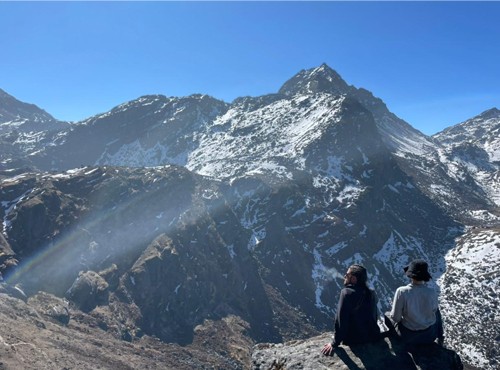
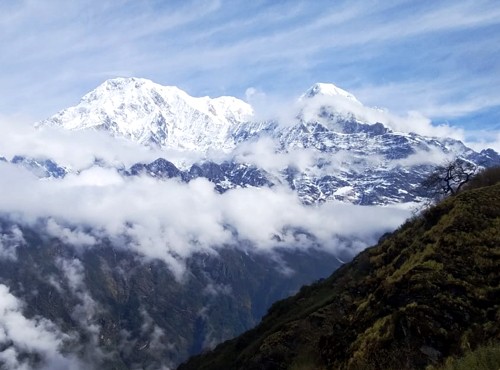
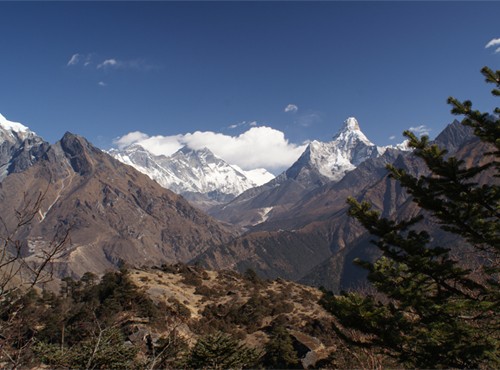
During the Langtang Valley Trek, the mountain scenery changes gradually and becomes more dramatic as you gain elevation, offering a continuous visual journey through different Himalayan landscapes. In the lower section from Syabrubesi to Lama Hotel, dense forests and river valleys dominate the scenery, with only occasional glimpses of distant ridges, creating a sense of anticipation as you move deeper into the valley. As you ascend from Lama Hotel to Ghodatabela, the forest begins to open up and the first clear views of snow-capped peaks appear, especially Langtang Lirung, which starts to emerge above the ridgelines and becomes a constant presence. Between Langtang Village and Kyanjin Gompa, the scenery turns more alpine and dramatic, with wide-open valleys, glaciers, and prominent peaks like Langtang Lirung, Dorje Lakpa, and Yala Peak forming a breathtaking Himalayan backdrop. At Kyanjin Gompa, the mountain panorama reaches its peak, with Langtang Lirung towering directly above the village, glaciers flowing into the valley, and surrounding peaks creating a natural amphitheater of ice and rock, while side hikes to Kyanjin Ri and Tserko Ri offer even more spectacular views, including 360-degree Himalayan vistas and, on very clear days, distant peaks like Shishapangma in Tibet. In September 2026, these views are especially rewarding as early monsoon clouds gradually clear, bringing sharper visibility, fresh post-rain landscapes, and some of the clearest mountain panoramas of the year, particularly in the second half of the month.
Weather Conditions in September
The weather is one of the most important factors to consider when planning a September trek in the Langtang Valley. Early September often still experiences occasional rain showers as the monsoon gradually withdraws, creating humid conditions in lower elevations, making trails slightly slippery in forested sections, while mountain views are frequently obscured by afternoon clouds.
Mid-September marks a clear transition phase where rainfall reduces significantly, mountain visibility begins to improve, and trekking conditions become more stable and enjoyable. By late September, the weather is generally much more stable with clear skies, excellent mountain views, dry trails, and ideal conditions for photography and overall trekking experience.
Temperature conditions vary significantly with altitude throughout the trek. In Syabrubesi, daytime temperatures usually range between 18°C to 25°C, while nights drop to around 10°C to 15°C. At Lama Hotel, daytime temperatures range from 10°C to 18°C, and nighttime temperatures fall to around 5°C to 10°C. In Langtang Village, daytime temperatures typically stay between 8°C to 15°C, while nights can drop to 2°C and 6 °C. At higher altitudes in Kyanjin Gompa, daytime temperatures range from 5°C to 12°C, and nighttime temperatures can fall to around 0°C to 3°C. Due to this variation, nights become significantly colder as you ascend, so carrying proper warm layers is essential even during September.
Trail Conditions in September
The trekking routes in the Langtang Valley during September generally offer a comfortable pace with lush green scenery, waterfalls, rivers, and beautiful landscapes along the trail. However, early September is still marked by post-monsoon conditions. During this time, be cautious of rain-drenched muddy trails, loose and slippery rocky paths, leeches in the lower forested areas, and occasional rain showers. But in mid and late September, the conditions steadily improve with drier trails and an easy walking pace, along with the majestic mountain views.
Difficulty level and fitness
The Langtang Valley Trek is considered a short and easy-level trek, which is suitable for beginners with a reasonable level of fitness. You should walk around 5–7 hours per day, with a gradual but steady increase in altitude. While no technical climbing skills are required, the trails have uphill climbs, downhill, and uneven and rocky slopes that can be challenging in sections, especially above 3,000 meters. Early September may also bring wet and slippery trails. A basic level of fitness, such as regular walking, jogging, or hiking, is recommended, along with good stamina and strong legs for long days on the trail. With proper pacing and acclimatization, even first-time trekkers can comfortably complete the journey.
Accommodation and Food
The Langtang Valley trek is a moderate trek, with basic but comfortable tea houses and lodges along the way. Rooms are twin-sharing with simple beds, blankets, and shared bathrooms, giving a comfortable and cozy experience. Facilities may be more basic at higher altitudes, but local hospitality in traditional Tamang villages will make your experience more exceptional. The foods are generally freshly cooked Nepali and simple international meals, but they may be more limited at the higher elevations. Safe drinking water is available in the form of boiled water (usually at an extra cost), while it is recommended to carry water purification tablets or drops for treating natural water sources along the way.
Cultural Experience
The Langtang Valley Trek offers a rich glimpse into the traditional Tamang way of life, deeply influenced by Tibetan culture. Along the trail, you pass through welcoming mountain villages, adding a sense of calm and spiritual presence to the landscape. You’ll experience warm hospitality in teahouses, taste simple homemade mountain food, and observe daily life shaped by nature and tradition. This cultural experience will make a meaningful connection with the people of the Himalayas, enhancing a journey with a perfect blend of nature and culture.
Packing List
Clothing
- Thermal base layers (top & bottom)
- Fleece jacket or mid-layer
- Lightweight warm-down jacket
- Quick-dry trekking shirts
- Trekking pants
- Warm hat or beanie
- Lightweight sun hat or cap
- Gloves
Footwear
- Trekking boots with a strong grip sole.
- Trekking socks
- Light camp shoes or sandals
Accessories & Gear
- Adjustable Trekking Poles
- Headlamp with spare batteries
- Sunglasses for UV protection
Hydration & Essentials
- Reusable water bottles or hydration bladders
- Water purification tablets or a filter bottle
Health & Hygiene
- Basic first aid kit (personal medicines included)
- Sunscreen (SPF 30–50+) & lip balm
- Wet wipes, hand sanitizer, toilet paper
- Quick-dry towel
- Hand sanitizer
- Basic medicines and personal medicine (if you have any)
Extras
- Power bank
- Snacks (energy bars, nuts, chocolate)
- Zip-lock or dry bags for waterproofing items
Tips for a Safe and Enjoyable Trek
To make the Langtang Valley Trek safe and enjoyable, it’s important to pace yourself and allow time for proper acclimatization as you go up. It is recommended to stay well-hydrated and eat regularly to maintain energy levels throughout the day.
In early September, you should be prepared for wet or slippery trails by wearing good-quality trekking boots with a strong grip and using trekking poles for stability. It is also advised to always check the weather before starting your walk and carry a light rain jacket, as conditions can change quickly in the mountains. You are requested to respect local culture and traditions in Tamang villages, and keep a flexible mindset, as mountain weather and trail conditions can vary from day to day.
If you plan to visit in Early September, you should be fully prepared for wet and slippery trails by wearing good-quality trekking boots with a strong grip and using trekking poles for stability. It is also advised to always check the weather before starting your walk and carry a light rain jacket, as the weather can change quickly in the mountains. It is a humble request to respect local culture and traditions in Tamang villages, and keep a flexible mindset, as mountain weather and trail conditions can vary from day to day.